
The best platform for marketing for insurance agents locally isn’t automatically the most popular social network. Choose channels based on where nearby prospects look for insurance and how they prefer to connect. Local search and a useful website help people find and assess your agency, while a focused mix of channels can work better than relying on one.
It’s easy to spread your effort across platforms while leaving basic questions unanswered: Can local prospects find you, trust what they see, and take a clear next step? A practical plan starts with matching your message to your community and keeping every detail consistent.
Learn how to choose the right marketing channels, maintain accurate local listings, build trust through helpful content and community connections, and guide interested prospects toward an action. These steps make your local presence clearer and easier to act on.
Key Takeaways
- Choose outreach channels around how local prospects prefer to learn and connect, then make each campaign’s next step easy to understand.
- Keep your business details consistent across local listings so people can quickly find accurate information about your services and hours.
- Build credibility by answering community questions, listening to client concerns, and responding thoughtfully to feedback.
- Design focused landing pages with a clear call to action, helping nearby prospects move from interest to an inquiry or appointment.
1. What is the best marketing platform for insurance agents?
Marketing for insurance agents locally works best when it meets prospects where they seek help. Use search to reach people comparing coverage, social media to build community visibility, and seminars to offer direct education. Evaluate channels by qualified inquiries, not clicks alone. A sound strategy connects each campaign to a relevant audience and a clear next step.
Independent agents can explain the range of insurance options they represent. Captive agents should align messages with their carrier’s brand and available products. Both can tailor local content to customer needs, such as questions from new homeowners or small-business owners.
U.S. insurance ads should present coverage and product claims clearly and accurately. Review materials against applicable state requirements and carrier guidance before publishing, especially seminar slides and paid campaigns. Respect privacy by collecting only the information needed to respond and honoring requests to stop further outreach.
For an independent agency, marketing for insurance agents locally can combine paid and organic channels. Use pay-per-click ads for searches such as “auto insurance near me” and Meta ads on Facebook or Instagram to reach people in a defined area. Geo-targeted display ads can build recognition among local audiences. Organic posts, including event updates and straightforward answers, help sustain visibility between campaigns.
Match each tactic to the insurance need: auto tips for new car owners, home coverage information for buyers, life insurance needs worksheets, or business coverage education for local owners. A seminar works best with a clear topic, simple registration, reminders, sign-in, follow-up, and an appointment as the next step.
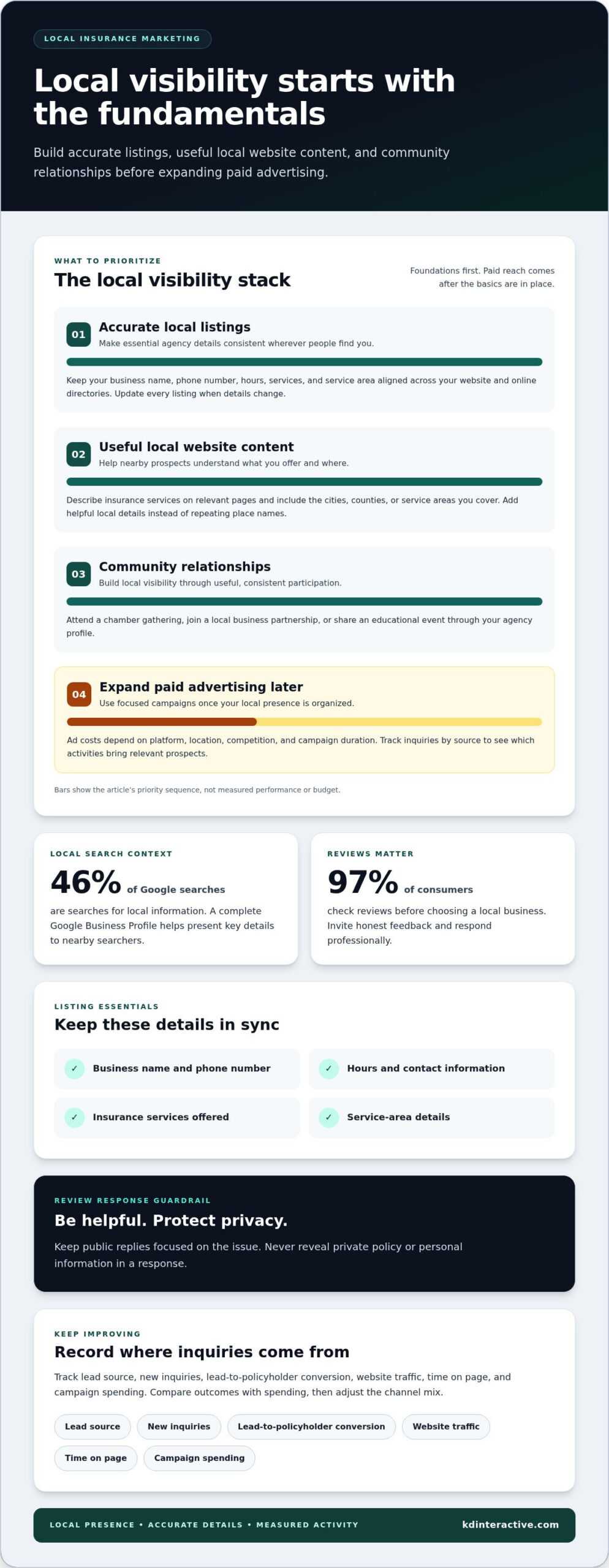
Measure results by recording each lead source, new inquiries, lead-to-policyholder conversion, website traffic, and time on page. Compare outcomes with campaign spending to assess return, then adjust the channel mix. A monthly newsletter can also share useful insurance tips and renewal reminders.
2. Local listings and consistent business information
Effective marketing for insurance agents locally starts with accurate business details wherever prospects might find the agency. Keep the name, phone number, hours, services, and service area consistent across the website and online directories. When an office moves or hours change, update every listing to avoid confusing residents with conflicting information.
Complete the Google Business Profile with insurance services, contact information, hours, and service-area details. Use profile updates to share a seminar announcement, seasonal insurance tip, or change to business information. Google searches for local information account for 46% of Google searches, making a complete profile a practical way to present key details to nearby searchers.
Reviews also influence local discovery. About 97% of consumers check reviews before choosing a local business. Invite satisfied clients to leave honest feedback, and respond professionally to questions or concerns. Keep replies focused on the issue, and never reveal private policy or personal information in a public response.
Local SEO works best when website content reflects how nearby residents search. Include relevant city, county, or service-area terms on pages describing the insurance services offered. For example, an agency serving Madison and nearby communities can make those locations clear on relevant pages, while adding useful details instead of simply repeating place names.
A small-business budget can support local visibility through focused, ongoing actions. Prioritize complete listings, useful website updates, and community relationships before expanding paid advertising. Attend a chamber gathering, join a local business partnership, or share an educational event through the agency profile. These steps help the agency engage its audience without relying solely on ad spending.
Local ad costs depend on the platform, location, competition, and campaign duration; results depend on targeting, the offer, and follow-up. Track inquiries by source to identify which activity brings relevant prospects. Marketing for insurance agents locally becomes easier to assess when listing updates and campaign responses are recorded consistently. If coordinating local search details takes time, local SEO support can help organize the work.
3. Building trust and emotional connections with local clients
Trust grows when an insurance conversation starts with the client’s needs, not a product pitch. Ask what prompted the search, listen to their concerns, then explain relevant options in plain language. For example, a new homeowner may need help understanding how coverage fits their property and household priorities. A useful strategy addresses that concern before asking for a decision.
Show up where local relationships already form. Volunteer with a neighborhood organization, participate in a community event, or offer an educational session with a local professional. These actions make an agent visible through service, not just advertising. In online groups, follow community rules and offer useful answers before mentioning your services. Consistent participation helps attract people who value accessible, local guidance.
Digital marketing can carry that helpful tone beyond in-person conversations. Share local weather-risk information, explain common insurance terms, or post a short answer to a frequently asked question. Keep each example accurate and clear, and review promotional materials for applicable compliance requirements. Useful content supports visibility and gives consumers a reason to return when they need guidance.
Referrals can grow from strong service relationships. Nielsen reports that 90% of consumers are more likely to trust purchasing advice from friends and family. After helping a client resolve a service issue or complete a policy review, invite honest feedback or ask whether they know someone who could use similar guidance. Keep the request low-pressure and never disclose a client’s personal or policy details.
Testimonials can reinforce trust when shared with permission and presented accurately. A short client comment about clear explanations, for example, can illustrate an experience prospects may value without promising identical outcomes. Respond thoughtfully to feedback, especially when someone raises a concern. A considerate reply demonstrates accountability and can make a difficult interaction an example of respectful service.
Measure trust alongside growth. Track referral inquiries, review themes, and responses to educational posts. If people repeatedly ask about a local risk or policy term, use that signal to shape future content. This feedback loop keeps community outreach relevant and helps an agent improve service over time.
4. Landing pages and calls to action
A focused landing page gives nearby prospects one clear destination after an ad, search result, or QR code. Match the page to the promise that brought them there. For example, an auto insurance ad should lead to a page about auto coverage, not a general agency homepage.
State whom the agency serves, which products it offers, and what happens next. An independent agent might explain the communities served and how an insurance review works. Add accurate contact details and a clear appointment option so prospects can act without searching for another step.
Keep each page focused. A home insurance page can explain the service process and invite visitors to book a conversation. A business insurance page can speak directly to local owners. Specific, relevant information builds credibility and makes the agency’s local presence easier to understand.
Make the call to action direct and descriptive. “Request an insurance review” tells visitors what to expect, while “Learn more” leaves the next step unclear. Place the action near relevant details, then repeat it near the page’s end for readers who want context first.
Check the page on a phone as well as a computer. Local shoppers may arrive from a mobile search or scan a QR code on direct mail. Make contact options easy to tap, keep forms simple, and remove distractions that compete with the appointment request.
Build trust with practical details, not sweeping promises. A short agent biography, service-area information, and clear explanations of available products help answer common questions. Keep page claims consistent with the agency’s advertising and product information. A useful FAQ can address appointment steps or what information to prepare.
Measure page performance by tracking visits, form submissions, calls, and booked appointments. Compare results by campaign source, such as a local ad or seminar invitation. If visitors arrive but don’t act, check whether the page matches the ad, answers their likely question, and offers one clear next step.
Use focused landing-page content to connect local search and advertising with a clear action for prospects.
KD Interactive: Local SEO Services
KD Interactive helps insurance agencies strengthen local search visibility with Local SEO Services and SEO Keyword Analysis. Turn to us when local prospects struggle to find your agency or your website content doesn’t match the searches people make in your area.
Content Creation can help answer common insurance questions and make local pages more useful. Press Release Distribution can share agency news and community updates. Together, these services support a clearer digital presence, from choosing relevant local search terms to publishing helpful information for nearby prospects.
To build a more consistent local search strategy for your agency, contact KD Interactive or visit kdinteractive.com.
Turn Local Attention Into Steady Progress
Local growth is easier to manage when marketing has a clear purpose. Choose one audience to focus on, connect your next campaign to a specific need, and review what prospects do after responding. That creates a practical learning loop: each inquiry can reveal where the message is clear and where the next step needs work.
A focused approach to marketing for insurance agents locally should reflect the agency’s community, priorities, and capacity to follow up. The goal isn’t to be everywhere. It’s to build a recognizable presence that helps nearby people understand why they should start a conversation with you.
KD Interactive offers Local SEO Services, Content Creation, and Press Release Distribution to support agencies strengthening their local visibility and communications. If you’re ready to shape your next step around your agency’s needs, contact KD Interactive today. Keep moving forward with a clear plan and a local presence that grows with your business.
Frequently Asked Questions
What is the best marketing platform for insurance agents?
The best platform is the one your intended local audience uses when seeking insurance. For high-intent shoppers, prioritize search visibility; for ongoing familiarity, choose a social channel where community members participate. An independent agent can compare search inquiries with event-generated inquiries during a campaign, then invest in the source producing qualified conversations rather than just clicks.
How can insurance agents optimize Google Business Profile and local SEO?
Optimize a Google Business Profile by treating it as an active service page, not a one-time setup. Select accurate insurance categories, describe the agency’s actual offerings, and specify the communities served. Review the profile after any change to contact or office details. Then search the agency name and its main service terms yourself, noting outdated results that could confuse prospective clients.
How much should a local insurance agency spend on marketing?
Set a marketing budget based on business capacity and measurable goals, not a universal industry formula. First decide how many new policyholder conversations the agency can handle, then account for channel choice, local competition, campaign duration, and follow-up time. Review spending alongside qualified inquiries and completed policies. If a channel attracts clicks but few genuine prospects, adjust its message or allocation before expanding it.
How can insurance agents generate referrals from local businesses and customers?
Generate referrals by making introductions useful for both sides. A local accountant, real estate professional, or attorney could share a neutral insurance checklist with clients, while the agent offers an educational session in return. After a helpful service interaction, ask policyholders whether they know someone who would value guidance. Record referral sources and thank people without sharing private client details.
What community events and sponsorships help insurance agents attract clients?
Choose events that match attendees’ coverage needs. A homebuyer workshop can suit home insurance education, while a small-business expo may connect an agent with local owners. Sponsorship works best when paired with useful participation, such as answering general questions or offering an educational handout, rather than relying on a logo alone. Track conversations after each event to guide future participation.