
Your best local business partner may be a business that doesn’t sell what you do. Learning how to partner with other local businesses starts with finding a complementary business that shares your audience, then agreeing on a straightforward way to create value for both sides. A small first collaboration can help you assess the fit before committing to an ongoing arrangement.
Looking beyond your own customer list can introduce your business to new people, share promotional effort, and strengthen community ties. Choose a partner whose values and customers align with yours, and keep the offer useful and responsibilities clear. This guide covers how to find compatible businesses, collaborate, track results, and maintain the relationship. You’ll also find ideas such as referrals, shared promotions, and joint events, so you can choose an approach that suits your goals and capacity.
Key Takeaways
- Start with a low-effort collaboration, such as a shared social post or in-store promotion, to see how customers respond.
- Look for businesses with similar audiences, complementary offerings, and values that fit your own.
- Agree on goals, responsibilities, and promotion plans early, then track results and keep communication open.
- Find potential partners through local associations, community events, referrals, and business directories, and follow up with a specific idea.
1. What are some business collaboration ideas?
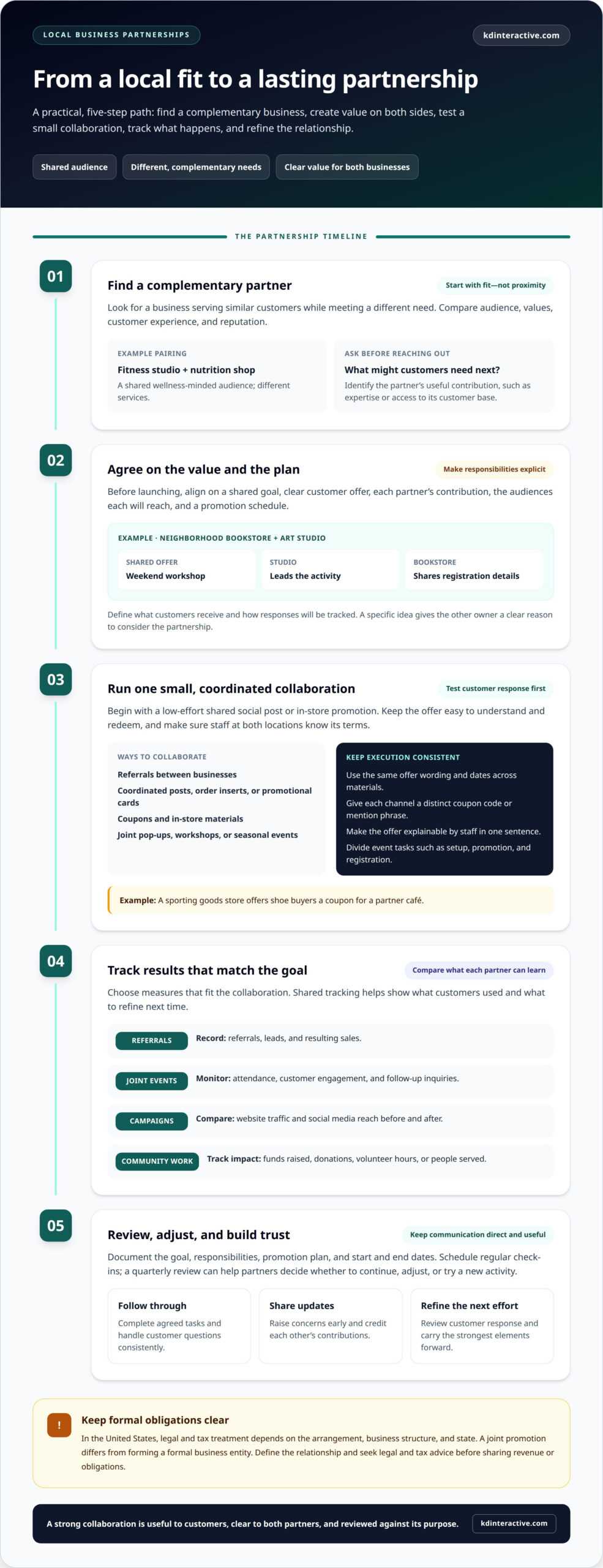
To structure a co-marketing partnership, agree on a shared goal, a clear offer, each partner’s contribution, and a promotion schedule. For example, a neighborhood bookstore and art studio could promote a weekend workshop, with the studio leading the activity and the bookstore sharing registration details. Decide which audiences each partner will reach, what customers receive, and how you’ll track responses. These details keep the arrangement useful to both businesses and prevent duplicated effort.
Promote the offer through social media, printed flyers, coupons, and in-store materials. A restaurant could post a partner’s event announcement while the partner displays a matching flyer near checkout. Use a distinct coupon code or mention phrase for each channel to see which placements bring customers in. Keep the wording, dates, and offer consistent across both businesses’ posts and printed materials.
Make the incentive easy to understand and redeem. For example, a customer buying running shoes at a local sporting goods store could receive a coupon for a partner café. Staff at both locations should know the terms and be able to explain the offer in one sentence. For referrals, agree on which services suit each other’s customers, then give employees a simple way to recommend the partner without pressure.
Reach a shared audience through coordinated posts, order inserts, or promotional cards at both locations. A home décor shop and local painter could share practical project tips, then direct readers to each other’s services. Partners can also co-host a pop-up, workshop, or seasonal event, dividing tasks such as setup, promotion, and registration. Start with one small campaign, review referrals and engagement, then adjust the next collaboration based on what customers used.
2. Why partner with local businesses?
A strategic partnership works best when both businesses serve similar customers but meet different needs. For example, a fitness studio and nutrition shop can reach wellness-minded residents without offering the same service. Their complementary offerings give customers a useful connection and let each business introduce its expertise to a relevant audience. That shared relevance makes for a stronger collaboration than partnering simply because another business is nearby.
To find a good fit, consider who buys from you, what they may need next, and which local businesses already serve those needs. A coffee shop and bakery may attract similar customers at different times of day. A home renovator and real estate agent may also serve people making related decisions. Compare values, customer experience, and reputation, then identify a specific contribution each business can make, such as specialist knowledge or access to its customer base.
Choose a partner with a practical goal in common. If a yoga studio wants to introduce beginners to wellness services, a nearby nutrition store could help shape an educational event. Before approaching the business, write down the audience, shared objective, and each partner’s likely contribution. Explain how the collaboration could benefit both sides instead of asking for promotion without offering value.
In the United States, legal and tax treatment depends on the arrangement, business structure, and state involved. A joint promotion differs from forming a formal business entity. Define the relationship and seek legal and tax advice before sharing revenue or obligations.
Common pitfalls include mismatched audiences, unclear responsibilities, inconsistent customer experiences, and disagreements over costs or results. For example, a partner’s promotion may disappoint customers if staff don’t understand its terms. Set expectations in writing and agree on how you’ll handle customer questions and review outcomes. If local visibility is part of your shared goal, local SEO support can help strengthen how customers discover a business in local searches.
3. Maintaining communication and developing long-term relationships
Approach a local business with a specific partnership idea tied to its customers. Mention the shared opportunity, what you can contribute, and a practical first step. For example, ask for a 20-minute call to discuss a joint workshop or referral arrangement. A focused invitation gives the other owner a clear reason to respond.
Once both parties agree, document the goal, responsibilities, promotion plan, and start and end dates. Schedule regular check-ins to review progress and address small issues before they affect the relationship. A quarterly review can help partners decide whether to continue, adjust the arrangement, or try a new activity. Keep communication direct, respectful, and useful.
Track outcomes that match the partnership’s purpose. For a referral arrangement, record referrals, leads, and resulting sales. For a joint event, monitor attendance, customer engagement, and follow-up inquiries. Partners can compare website traffic and social media reach before and after a campaign. Shared tracking shows both businesses what is working and where to refine their efforts.
Trust grows when partners follow through on agreed tasks and treat customers consistently. For a community event, confirm who handles venue details, promotion, and attendee questions. Share updates promptly, credit each other’s contributions, and raise concerns early. These habits help sustain the partnership and strengthen each business’s credibility in the community.
Community and nonprofit partnerships can give local commerce a shared purpose. A business might donate a portion of sales to a local charity while its partner promotes the campaign. Track impact through funds raised, donations, volunteer hours, or people served. Review the results, then carry the strongest elements into a future project or another suitable community activity.
4. Finding local business partners through associations, events, referrals, and directories
Start where local owners already gather. Business associations, Chamber of Commerce meetings, community events, and networking workshops create natural opportunities to discuss shared needs. Before attending, identify the customers you want to reach and the types of businesses that serve them. This focus helps you explore how to partner with other local businesses instead of collecting contacts without a clear purpose.
Directories and social media can help you identify potential partners before meeting them. Look for businesses with complementary services, an active local presence, and customers whose needs connect with yours. A real estate agent might shortlist moving companies, home inspectors, or furniture stores. Review how each business presents its services, then note one specific way a partnership could benefit both audiences.
Referrals offer another practical route. Ask trusted customers, suppliers, and community contacts which businesses they recommend for related needs. Before requesting an introduction, explain why you’re interested. At an event, discuss one mutually beneficial idea rather than making a broad pitch. Follow up with a brief message that recalls your conversation and suggests a practical next step.
Agree on clear financial terms before promoting a shared offer. Document which costs each party covers, whether revenue is shared, and how referral leads are attributed. For example, an event agreement could assign venue costs to one partner and promotion tasks to another. Written terms make it easier to resolve questions about responsibilities and outcomes as the collaboration develops.
For business owners considering how to partner with other local businesses, local search visibility can support discovery after a referral or event. Strengthen your local search visibility so nearby customers can find your business and understand its services.
KD Interactive: Local SEO Services
KD Interactive helps local businesses strengthen their online visibility, supporting the connections they build through community partnerships. When customers hear about your business through a referral or shared event, local search visibility can help them find you and learn what you offer.
KD Interactive’s Local SEO Services support your presence in local search, while the Google Map Pack with AI Assistant helps you engage with nearby searchers. For a joint campaign, Content Creation can provide useful pages and promotional materials about the partnership. Press Release Distribution can also help share news about a community initiative or business collaboration.
When you’re ready to build on a partnership with a clearer digital presence and coordinated content, contact KD Interactive to discuss your local visibility goals.
Put Your Next Partnership Into Motion
A promising collaboration doesn’t have to start as a major campaign. Choose an opportunity that fits your current capacity, set a clear first step, and let the relationship grow through experience. Learning how to partner with other local businesses means turning a shared idea into a practical action your customers can recognize and value.
As your partnership takes shape, make sure people can find and understand your business online. KD Interactive offers Local SEO Services, Content Creation, and Press Release Distribution to support local visibility and communicate business news. These services can complement your work with nearby partners, especially when you want your community presence to carry across search and content.
Contact KD Interactive to discuss your goals, and take a thoughtful next step toward stronger local visibility. A well-matched partnership can become a meaningful part of how your business grows in its community.
Frequently Asked Questions
Why partner with local businesses?
Local partnerships can help customers discover useful services through a business they already know. They can also make each business’s offering more complete without requiring either partner to provide every service. For example, a garden center could introduce customers to a local landscaper, who could help clients choose suitable plants. The partnership works best when both businesses protect customer trust and contribute value.
What are some business collaboration ideas?
Create a shared customer resource, such as a seasonal planning guide with advice from two complementary businesses. For example, a tax preparer and bookkeeper could develop a small-business recordkeeping checklist. Partners could also introduce their staff to each other, create a customer welcome package, or host a short online Q&A. Choose an idea that meets a real customer need and gives each business a useful role.
What are effective ways for local businesses to find potential partners?
Start with people who understand your work. Customers, suppliers, and community contacts may know businesses that serve related needs. Explore local association directories and social channels to identify prospects, then look for signs of active community involvement. A warm introduction can ease the first conversation, but a thoughtful direct message can work too. Mention a shared audience and explain the value you could contribute.
What types of partnerships can local businesses create?
Local businesses can build referral, co-marketing, bundled-offer, event, resource-sharing, and nonprofit partnerships. A florist and event venue might package related services, while a repair shop and parts supplier could coordinate resources. A nonprofit collaboration can connect a business’s sales or services with a community cause. Choose the structure based on the goal: reaching customers, improving operations, strengthening an offer, or supporting the community.
What should a local business partnership agreement include?
A written agreement should identify the businesses involved, the project’s purpose, each party’s tasks, and the start and end dates. Explain how partners will handle shared expenses, revenue, referrals, promotional materials, customer information, and disagreements. Include a process for changing or ending the collaboration. For arrangements involving money or significant obligations, have an attorney review the terms before signing.
What are low-cost partnership ideas for small local businesses?
Start with activities that use existing skills and channels instead of paid venues or elaborate materials. Two businesses could introduce their staff to each other, exchange guest articles, share a customer resource, or include partner information in order materials. A neighborhood service business might also offer a short educational session in its own space. Keep the first project simple, assign tasks clearly, and assess whether customers found it useful.