
More lease leads come from a connected digital presence, not a single promotion. Apartment marketing includes the ways a property builds trust and reaches prospective renters, from online reviews and helpful website content to social media and local search visibility. Effective apartment complex marketing ideas connect these touchpoints, helping renters discover a community, explore it remotely, and take the next step.
It makes sense to focus on the property itself: floor plans, amenities, location, and leasing offers all matter. But prospective renters often form an impression before they speak with a leasing team, based on what they find online and how clearly a community answers their questions. This guide explains practical ways to strengthen that first impression and attract more qualified interest. You’ll find ideas for building a positive review presence, creating helpful website and social content, and using digital-first tactics to make a property easier to find and evaluate. The aim is a more consistent path from online discovery to a leasing inquiry, shaped around what renters need to know.
Key Takeaways
- Build resident events and local business partnerships around the neighborhood’s strengths to give renters more reasons to connect with your community.
- Make review responses part of reputation management, and use resident feedback to strengthen trust with prospective renters.
- Use clear, mobile-friendly property pages and visual social content to help prospects explore the community before scheduling a visit.
- Connect local search visibility, useful content, and simple inquiry paths so renters can move from discovery to a leasing lead.
1. What is Apartment Marketing?
Apartment marketing connects a community’s features with renters looking for a place to live. It can include local partnerships, resident experiences, promotions, social content, and digital visibility. Strong apartment complex marketing ideas help prospects discover a property and understand what living there offers.
Which listing sites and platforms generate the most qualified leads? It varies by property. Track inquiries from each listing platform, then compare how many become tours and signed leases.
What fair housing rules apply to apartment advertising in the United States? Use inclusive language, present housing opportunities fairly, and avoid wording that suggests a preference for or exclusion of particular people. Keep property descriptions and qualification practices consistent, and focus campaign messages on the community and its features.
How should communities reach different renter demographics and local audiences? Match content to the platforms prospects use, then highlight relevant details: nearby coffee shops for neighborhood appeal, pet-friendly spaces for pet owners, or video tours for remote prospects. Local business features and resident stories can make community messages feel specific rather than generic.
How can managers measure marketing performance, lead conversion, and cost per lease? Track inquiries, tours, applications, and signed leases by channel. Divide each channel’s marketing spend by the leases attributed to it to calculate cost per lease, then compare results across consistent periods.
What are the pros and cons of using a marketing agency? An agency can bring digital expertise and consistent campaign execution. It also adds an expense and calls for clear goals, access to property information, and regular communication to keep the work aligned.
Build community engagement with events involving local partners, such as a fitness class hosted with a nearby studio or a resident perk from a coffee shop. Invite residents to bring a guest, and share useful event details on social platforms to introduce prospects to the community.
Support retention with renewal perks or long-term resident benefits. Make move-in day welcoming with directions, refreshments, or a personal greeting. Invite residents to share their genuine experiences online, and feature their posts to show everyday community life.
During vacancies or seasonal slowdowns, refresh property content, highlight available features, and promote a time-limited leasing offer. Review which channels generate inquiries, then adjust the message to answer renters’ practical questions.
2. Online reviews and reputation management
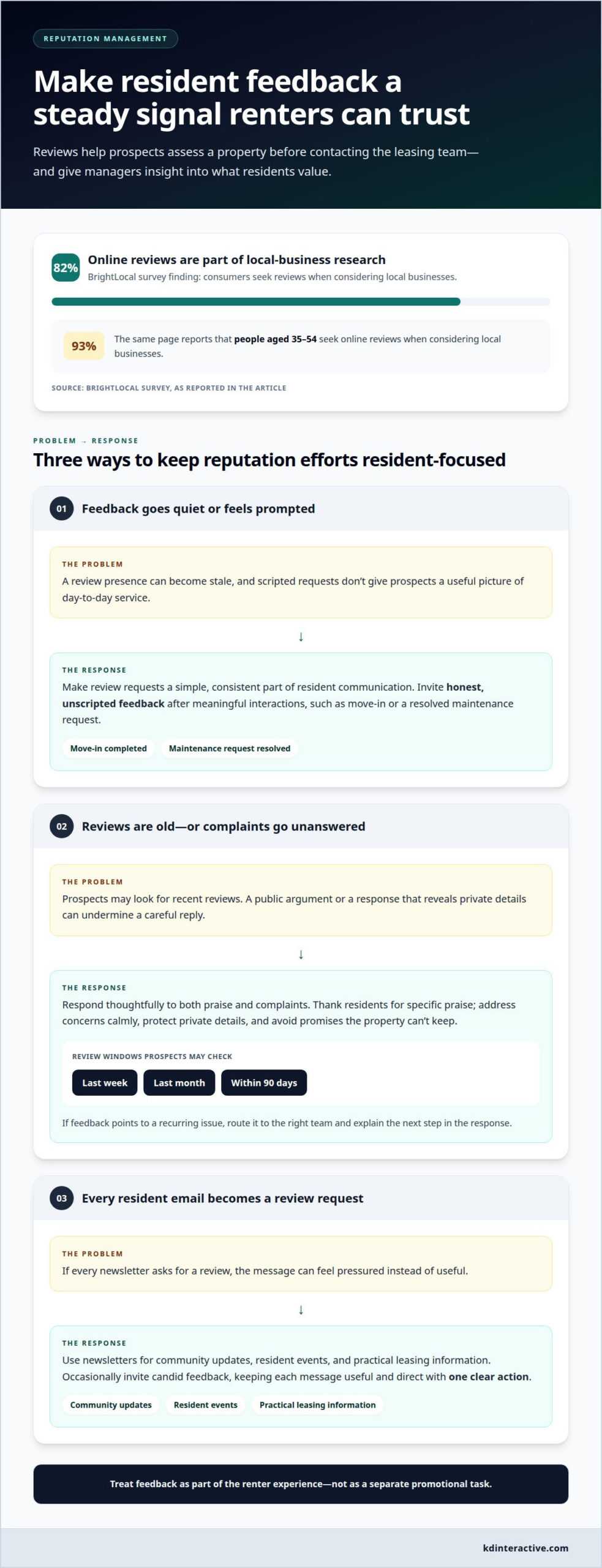
Google reviews help prospective renters assess a property before contacting its leasing team. A steady review presence also gives managers direct insight into what residents value, from maintenance communication to shared spaces. Treat feedback as part of the renter experience, not as a separate promotional task.
Make review requests a simple, consistent part of resident communication. Invite residents to share honest feedback after a meaningful interaction, such as completing a move-in or resolving a maintenance request. Keep requests neutral and don’t script responses. A range of genuine experiences gives prospective renters a more useful picture of the property and its day-to-day service.
Recency matters alongside the overall impression. A BrightLocal survey found that 82% of consumers seek online reviews when considering local businesses; the same page reports 93% of people aged 35-54 do so. Apartment prospects may look for reviews from the last week, last month, or within 90 days. A regular request process can help keep feedback current.
Respond to positive and negative reviews with care. Thank residents for specific praise, and address complaints calmly without sharing private details. If a review points to a recurring issue, route it to the right team and explain the next step in your response. Avoid public arguments and promises the property can’t keep.
Email newsletters can support reputation efforts without turning every message into a review request. Share community updates, resident events, and practical leasing information, then occasionally invite readers to leave candid feedback. Keep each message useful and direct, with one clear action, so the request feels relevant rather than pressured.
Consistent, resident-focused updates depend on clear writing. Content creation for property updates can help keep messaging useful across audience touchpoints.
3. Content for property websites and social media
A property website should help renters answer practical questions before contacting the leasing team. Make it mobile-friendly, organize floor plans and amenities clearly, and feature nearby transit, parks, and local businesses. Keep availability current and provide a clear inquiry path so visitors know what to do next.
Video and virtual tours let prospects explore from a distance. Zillow’s 2025 Rental Consumer Housing Trends Report found that 20% of surveyed renters considered a video tour essential, while 25% said the same about a 3D or virtual tour. Show room layouts, storage, shared spaces, and details that static photos may miss.
Social media works best when posts give renters something specific to evaluate. Share a floor-plan carousel, a short walkthrough, or a leasing FAQ about amenities and application steps. Save recurring answers in an Instagram FAQ Highlight, a Facebook photo album, or a pinned TikTok post.
What social media content and ads work best for apartment leasing? Share short property tours, clear floor-plan posts, and resident-focused updates, then promote relevant content to local prospects. Keep each ad accurate, highlight an available feature, and end with a direct next step, such as viewing availability.
Community posts can show the lifestyle behind a listing. For example, spotlight a walking route near the property or a local business residents can visit. Renting-versus-buying content can also explain practical differences, such as flexible lease terms and access to shared amenities, without making broad claims about what suits every renter.
Give each post a purpose: discovery, property evaluation, or inquiry. Wyzowl reported that 86% of businesses use video as a marketing tool. For apartment content, use that format to show real spaces and answer renter questions, then review which posts lead to meaningful inquiries.
4. Digital-first apartment marketing
Digital-first apartment marketing connects discovery, evaluation, and inquiry across the channels renters use. Ahrefs found that 68% of online experiences begin with a search engine. Accurate local search information is a practical starting point for making a community easier to find.
A Google Business Profile can display a property’s address, hours, directions, phone number, and website. Keep these details consistent with the property website and listing pages. Add location-specific information about nearby transit, neighborhood features, and available floor plans to help prospects assess whether the area suits their needs.
Make the mobile inquiry path clear. Show available units, leasing details, and fees on the property site, then make it easy to request information or schedule a tour. Zillow’s 2025 Rental Consumer Housing Trends Report found that 94% of participants agreed apartment listings should clearly list all fees. Accurate details help set expectations before a leasing conversation.
What are the most effective marketing strategies for apartment complexes? Connect local search visibility, accurate listings, useful property content, and a simple inquiry path. Targeted Google or social media ads can extend reach, while virtual open houses let prospects explore a community before scheduling an in-person tour.
A website chatbot can answer frequently asked questions at any time, including questions about availability or tours. Use it to direct visitors to current floor plans and the appropriate inquiry form. Keep its answers aligned with the property’s actual listings, so automated replies support positive relationships instead of creating confusion.
Measure each channel from first interaction to signed lease. Track website inquiries, tours, applications, and leases alongside social engagement and listing performance. If a local campaign brings visits but few inquiries, adjust its message or landing page. Comparing channel results helps identify which tactics present the property effectively.
Strengthen your property’s local search visibility with a focused digital marketing strategy.
KD Interactive
KD Interactive helps apartment communities strengthen the digital presence that supports renter discovery and leasing inquiries. Turn to the team when local visibility needs attention, property content needs direction, or search terms aren’t reaching the right audience.
Local SEO Services and SEO Keyword Analysis can align online visibility with searches and areas relevant to your community. Content Creation supports useful, consistent property messaging, while Press Release Distribution can share timely community news more widely. The right mix depends on your goals and gaps in current marketing.
Contact KD Interactive to discuss your apartment marketing priorities and choose a practical next step.
Turn your next marketing move into a clear plan
Choose a next step based on the gap most likely to slow renter decisions. If local discovery is weak, strengthen the property’s visibility in relevant searches. If prospects need clearer reasons to inquire, sharpen the content explaining the community and its value. The best apartment complex marketing ideas connect to a specific goal and are measured by the actions they encourage.
KD Interactive offers Local SEO Services, Content Creation, and Press Release Distribution to support apartment communities’ digital visibility and communications. A focused plan can bring these efforts together around the property’s audience and priorities, without adding disconnected tactics.
Ready to build a practical direction for your property’s marketing? Discuss a marketing plan with KD Interactive and take the next step with confidence.
Frequently Asked Questions
What is Apartment Marketing?
Apartment marketing is the coordinated effort to attract prospective renters, support leasing conversations, and maintain resident interest. It covers the path from first discovery to a leasing decision. For example, a property can align its listing details, tour experience, and follow-up message so prospects receive consistent information at each step.
How can apartment complexes improve local SEO and Google Business Profile visibility?
Build a complete Google Business Profile and connect it to useful, location-specific website content. Use accurate property details, relevant categories, and language that reflects how renters describe the area. Website pages can answer neighborhood questions, such as which transit options or services are nearby. Review profile activity and inquiries to understand what information prospects seek.
How can apartment complexes use virtual tours, video, and professional photography to attract renters?
Plan visual content around the decisions renters need to make. A photo set might show room dimensions, storage, finishes, and how rooms connect. Structure a virtual tour as a clear route through the unit, then include shared spaces that may influence a renter’s choice. Keep visuals representative of current apartments and amenities so expectations match the property.
What referral programs and resident events help increase apartment leases?
Make referrals easy to track with a simple form or referral code, and explain eligibility and reward timing upfront. For resident events, choose activities that encourage conversation, such as a seasonal plant swap or neighborhood clean-up. These give residents a reason to invite friends and help prospects experience the community beyond a leasing tour.
Which apartment listing sites and platforms generate the most qualified leads?
There isn’t one best platform for every property. Track inquiries from each listing platform, then compare how many lead to tours and signed leases.