
Visibility is not the same as authority. Becoming a local authority in your niche takes more than appearing in search results. Combine focused, useful content with local SEO so nearby customers can find your business and understand what you offer. A clear website and consistent local search presence help build that connection.
It can be frustrating to compete for attention when other businesses offer similar services. In a crowded market, broad marketing may be less effective. Make your expertise and local relevance clear instead of trying to reach everyone with the same message.
Learn how local SEO can strengthen your visibility in your niche, which signals help build trust with local searchers, and how competition may shape your next steps. We’ll also cover how focused content and a tailored SEO strategy can help your business stand out in the communities it serves.
Key Takeaways
- Use local SEO to make your services and expertise easier for nearby customers to discover.
- Assess local demand and provider saturation to focus on an audience your business can serve well.
- Build credibility with useful, accurate content that demonstrates practical knowledge of your niche.
- Earn reviews, backlinks, and referrals through strong service and genuine community relationships.
Local SEO and online visibility
Local SEO connects your expertise with nearby customers searching for specific services. Clear website content, accurate business details, and useful local information make it easier for them to find and understand your business.
Local SEO and Authority-Building Costs
In the United States, the cost depends on the work involved, including keyword research, website updates, content creation, and authority-building activity. A business entering a crowded market may need a different scope from one serving a narrower community. Pricing depends on the case and is provided after a quote request, with scope, competition, and content needs shaping the estimate.
Building Expertise and Credibility
Show your expertise with accurate service pages, practical answers, and clear examples of the problems your business solves. A towing company, for example, can explain its roadside assistance services and how customers can request help. Authority grows through consistent, useful information, not a single post. Track local search visibility, relevant website visits, calls, and qualified inquiries over time to see whether your content is reaching the right people.
Ethical Reviews, Backlinks, and Referrals
Ask customers for honest feedback after a completed service, and never script their comments or pressure them for positive ratings. Keep business listings accurate, and follow Google’s policies for profiles and reviews; U.S. consumer-protection rules also apply to truthful advertising and endorsements. For referrals and backlinks, build genuine relationships with local organizations and publish information they can reasonably share. AAA serves more than 62,000,000 members, illustrating the reach that established organizations can have.
Content for Local Expertise
Create pages that answer real questions from people in your service area. A towing business might explain its roadside assistance options, which vehicles it serves, and what information customers should provide when requesting help. Add relevant local examples, service-area details, and clear next steps. Check that each page is accurate, and update it when services or customer needs change. This gives nearby readers practical information while clarifying your niche and local relevance.
How do you identify a profitable local niche and target audience?
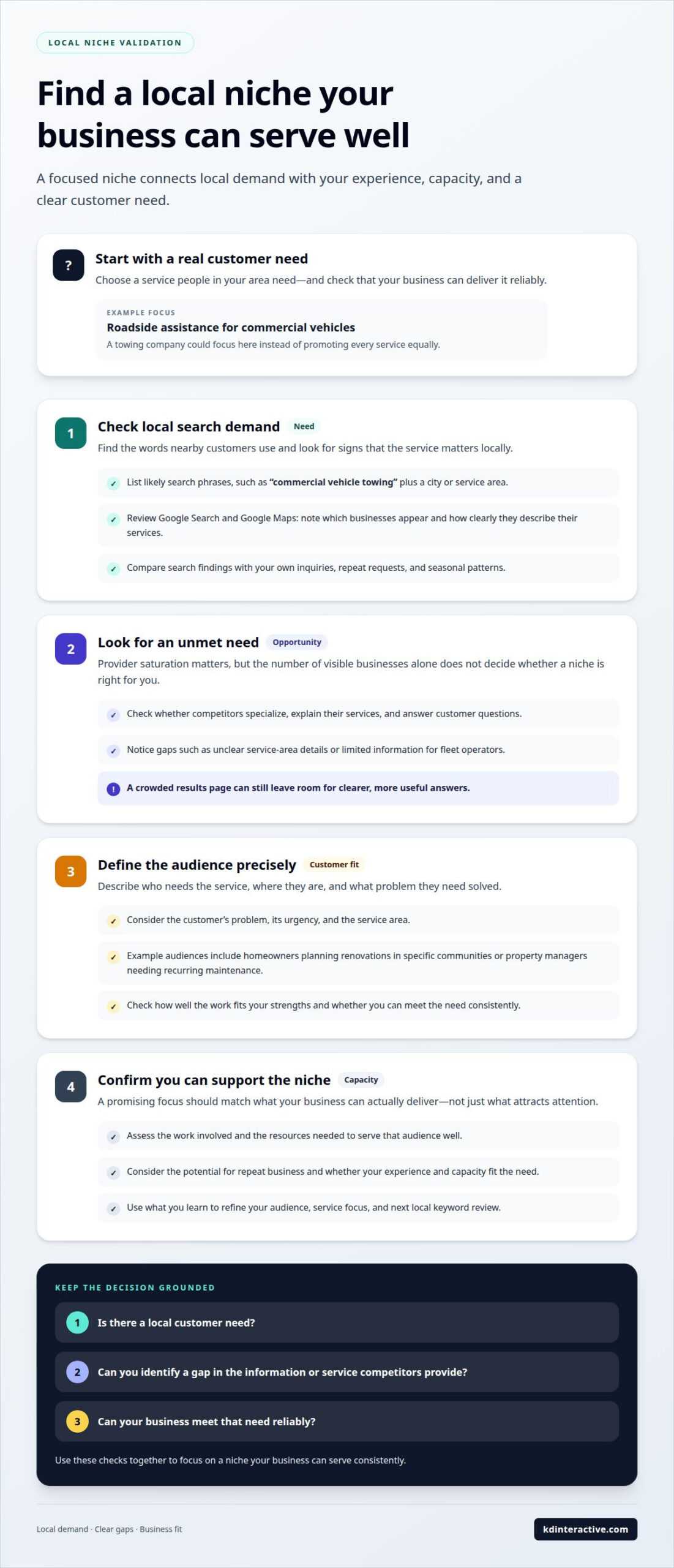
Start with a service people in your area need, then assess whether your business can deliver it reliably. A towing company, for example, might focus on roadside assistance for commercial vehicles instead of promoting every service equally. A narrower focus clarifies the customer, the problem, and the information your website should provide.
Next, examine local search demand. List phrases customers might use, such as “commercial vehicle towing” followed by a city or service area. Review Google Search and Google Maps results to see which businesses appear and how clearly they describe their services. Compare what you find with your own inquiries, repeat requests, and seasonal patterns. These signals can help distinguish a viable niche from a topic that attracts attention but few suitable customers.
Provider saturation matters, but the number of visible businesses alone doesn’t determine whether a niche is right for you. See whether competitors specialize, explain their services, and answer customer questions. Even a crowded results page may leave a gap, such as unclear service-area details or limited information for fleet operators. Choose a niche where your experience and capacity allow you to meet that need consistently.
Define your target audience by its needs and location, not just a broad label. A local contractor might serve homeowners planning renovations in specific communities, while another focuses on property managers who need recurring maintenance. Consider the customer’s problem, its urgency, the service area, and how well the work fits your strengths. Then assess the work involved, potential for repeat business, and resources needed to serve that audience well.
Use those findings to focus your next research step. A local keyword review can reveal how people describe their needs and where your niche has room to stand out. Explore local search demand as you refine the audience and service focus your business can support.
How can you build expertise and credibility in a local niche?
Make your expertise visible through specific explanations, not broad claims. A home renovation business can describe how it plans a kitchen project, which decisions affect material choices, and how homeowners can prepare. Use examples from completed work with permission, and describe the problem, process, and outcome accurately. This helps local readers assess your approach before contacting you.
Show who stands behind your advice. Add an author’s name to educational pages and describe relevant experience or qualifications accurately. If an accountant writes about small-business bookkeeping, practical examples can explain how organized records support decisions. Keep claims within your expertise, and update details when your services or processes change. Consistent information across your website, Google Business Profile, and other public listings helps customers recognize your business.
Connect your knowledge to the community you serve. A plumber might explain common causes of low water pressure and outline signs that call for professional assessment. Include service-area details and examples that reflect local customers’ needs, rather than repeating generic advice. Take part in relevant community events or professional groups, and share useful information without suggesting that participation is an endorsement.
Build credibility with a repeatable process for creating and reviewing content. Choose a customer question, prepare a helpful answer, and confirm that it reflects your current practice. For example, a bookkeeping firm could create a guide to records that help organize monthly expenses. Link related pages so readers can move from an introductory answer to a more detailed explanation. Clear structure makes your knowledge easier to use.
Track whether your efforts reach the right audience. Review search queries, page visits, calls, and inquiries to spot patterns in customer needs. If readers visit a service page but don’t take the next step, clarify its scope and contact options. Use what you learn to improve useful content and build a credible local presence over time.
How can local businesses earn reviews, backlinks, and referrals ethically?
Start with the customer experience. A landscaper who arrives as scheduled, explains a planting plan, and cleans the worksite gives customers a clear reason to recommend the business. Reliable service can build loyalty and encourage positive reviews and word-of-mouth referrals. Make the experience dependable before asking customers to share it.
Invite honest feedback with a neutral request after completing the work. A neighborhood accountant, for example, can send every client the same brief message asking about their experience. Don’t offer rewards for positive ratings, pressure customers, or ask only satisfied clients to post publicly. If someone raises a concern directly, respond respectfully and address the issue without trying to control their review.
Earn backlinks by contributing something useful to a relevant local organization. A home improvement contractor could offer a community group a practical guide to preparing a house for seasonal maintenance. The organization may choose to reference it on its website. Keep the information accurate, relevant, and genuinely helpful. Don’t demand a link or present a paid placement as an independent recommendation.
Referrals grow through relationships, not scripts. A financial planner might connect with local business associations by answering general questions at a workshop, without implying that members endorse the firm. Make it easy for satisfied customers to describe your service in their own words. Track which conversations and community resources lead to suitable inquiries, then focus on relationships that benefit both sides.
Keep the process transparent. Ask for feedback, thank people for referrals, and disclose any material relationship when sharing an endorsement. For a steady supply of useful resources that local organizations can share, develop locally focused content that answers real community questions.
For towing companies, dependable service can build customer loyalty and encourage positive reviews and word-of-mouth referrals.
That standard includes clear communication, respectful treatment, and an easy-to-understand next step. After completing the service, invite honest feedback neutrally and give customers room to decide whether to respond. If a customer has a concern, listen and address it directly instead of steering what they say publicly. Consistent care gives people a meaningful basis for describing their experience and keeps recommendations authentic.
KD Interactive: Local SEO Services
KD Interactive helps small businesses strengthen local visibility with strategies shaped around their niche and service area. Turn to its Local SEO Services when your website isn’t reaching nearby customers or your expertise is difficult to find in local search.
KD Interactive’s Keyword Research helps identify relevant search terms for your audience, while Content Creation turns those insights into useful pages that explain your services and answer customer questions. Press Release & Distribution can support local visibility when you have a newsworthy business update to share. Together, these services connect your local search strategy with clear, informative content.
Contact KD Interactive to discuss your local visibility goals.
Turn Local Visibility Into Your Next Growth Step
Becoming a local authority in your niche takes steady, deliberate work. Choose a next step that supports your business goals, such as improving a key service page or planning content around a customer need. Review what brings relevant inquiries, then use those insights to guide your next improvement.
KD Interactive offers Local SEO Services, Content Creation, and Press Release Distribution to help businesses strengthen their local search presence and share useful information. If you’re ready to shape a more focused approach around your niche, contact KD Interactive to discuss your goals.
Keep building thoughtfully, and make each improvement count for the community you serve.
Frequently Asked Questions
What does it mean to become a local authority in a niche?
It means local customers recognize your business as a relevant, dependable source for a specific need. A neighborhood bicycle shop, for example, might become known for fitting commuter bikes rather than offering every type of cycling service. Becoming a local authority in your niche means aligning what you know, what you publish, and what customers experience. The goal is meaningful recognition, not simply a prominent search position.
What local SEO strategies help establish authority in a niche?
Build focused service pages around a defined audience’s needs, then connect them with clear navigation and useful supporting information. A tax preparer serving independent contractors could explain which records help organize business income and expenses. Use location details naturally, keep business information consistent, and review search queries and customer inquiries to find unanswered questions. These signals can guide updates toward what local prospects need.
How do Google Business Profile and local citations affect niche authority?
A complete Google Business Profile helps people understand what your business offers, where it operates, and how to contact you. Local citations, meaning business details listed in directories or community listings, can reinforce that identity. For example, consistent business name, address, and phone details across a clinic’s profile and local directory listings make it easier for customers to recognize the business. Keep descriptions accurate and don’t list services you don’t provide.