
Fast local visibility and durable visibility rarely come from the same tactic. A local business can earn organic reach through search optimization, useful content, and unpaid social posts, or pay to put ads in front of an audience. Choosing organic marketing vs paid ads for a local business means weighing quick exposure against visibility that may continue attracting attention after a campaign ends.
It makes sense to want results soon without committing your whole marketing budget to ads. Organic marketing avoids paying for ad placement, but takes time and consistent effort. Paid ads can reach people faster, but visibility depends on continued spending. Neither approach is automatically the better value for every local business.
This article compares the two approaches by speed, cost, trust, and long-term value. You’ll see when each can help, what to measure, and how an organic foundation and carefully chosen ads can work together.
Key Takeaways
- Identify which organic channels can help local customers find and learn about your business, then focus your effort where it supports your goals.
- Use paid campaigns to test audience, message, and landing-page choices, and track which combinations lead to meaningful action.
- Understand how search, social, display, and influencer promotions differ before choosing a format for your next campaign.
- Build a marketing mix around your current visibility, customer journey, and ability to sustain ongoing content or ad spend.
What is organic marketing?
Organic marketing earns attention without paying for ad placement. For a local business, it can include SEO, useful website content, unpaid social media posts, email updates, and a complete Google Business Profile. These efforts build a discoverable presence over time rather than buying immediate visibility. The choice of organic marketing vs paid ads for local business often comes down to whether you need faster exposure or lasting discovery.
SEO helps pages appear for relevant searches, while content answers customer questions. For example, a Wisconsin plumber could publish advice about preparing pipes for winter. Social media can share that guidance and invite local discussion. Email can nurture people who opted to receive updates, with seasonal tips or links to service pages.
Local SEO connects a business’s website and online information with searches tied to its location. A verified Google Business Profile with accurate details, current photos, review responses, and answers to customer questions can strengthen local search visibility. Consistent business information and useful location-focused pages help customers understand where the business works and what it offers.
How do Google Business Profile, local SEO, and Google Ads work together? A Google Business Profile supports local discovery, while local SEO improves a website’s relevance for nearby searches. Google Ads can add paid visibility. Organic search terms and content can inform ad keywords and messaging.
Organic content can also support paid campaigns. A helpful article may answer questions before someone is ready to buy, then give ad visitors a useful next step. Advertising can reconnect with people who engaged with a website or social content through remarketing. Strong organic pages also give paid campaigns relevant material and a clear destination for ad traffic. This is one practical way to combine organic marketing vs paid ads for local business goals.
| Option | Cost model | Local role |
|---|---|---|
| SEO | Time and expertise | Earn search visibility |
| Content | Creation effort | Answer customer questions |
| Social media | Unpaid distribution | Share updates and engage |
| Content and management | Nurture interested readers | |
| Google Business Profile | Ongoing management | Support local discovery |
| Remarketing | Paid advertising | Reconnect with engagers |
Choose channels by matching customer questions and search behavior with the time you can devote to creating and maintaining useful content.
Paid advertising for immediate visibility and campaign testing
Paid campaigns can place a local business in front of people before organic visibility grows. With pay-per-click advertising, the business pays when someone clicks an ad. A local contractor, for example, could target people within a 10-mile radius who search for a specific repair. That investment can bring faster exposure, while organic marketing builds visibility through content and search over time.
Targeting shapes who sees a message. Paid platforms can use location, demographics, interests, search behavior, or previous website interactions. A neighborhood bakery might promote a seasonal offer to nearby searchers, then direct them to a page with matching details. The campaign works best when its audience, ad copy, and landing page answer the same customer question.
Campaign testing helps clarify which approach prompts action. Test one variable at a time, such as a headline, audience, or call to action. Then compare impressions, click-through rate, conversions, cost per click, and return on ad spend. If an ad gets clicks but few inquiries, the landing page may need clearer information or a simpler next step. Optimize based on those results, not clicks alone.
Organic and paid efforts can inform each other without serving the same role. Strong organic search terms can suggest relevant paid keywords, while paid campaigns can test wording before it becomes part of a longer-term content plan. A new business with limited search presence may use ads for a time-sensitive opening while useful website content continues answering customer questions. This mix is more responsive than relying on either channel alone.
Before advertising, make sure the destination is ready to convert visitors. A focused page should match the ad’s promise, explain the offer, and make the next action clear. If the page needs stronger, customer-focused copy, content creation can help align its message with the campaign.
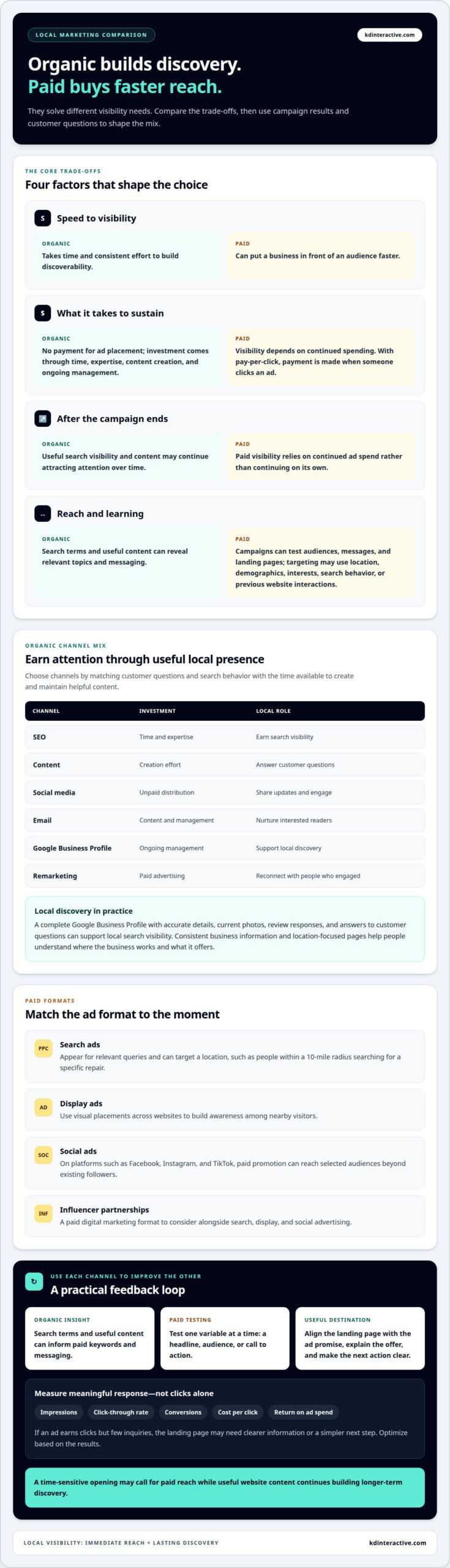
Display ads, PPC, social media ads, and influencer marketing
Paid digital marketing includes search engine ads, display placements, social media ads, and influencer partnerships. Search ads appear for relevant queries, while display ads place visual messages across websites. A local home-cleaning business might use search advertising to reach people looking for a cleaner, then use display placements to build awareness among nearby website visitors. Each format suits a different moment in the customer journey.
On Facebook, Instagram, and TikTok, organic posts reach people through unpaid distribution, while social ads pay to reach selected audiences beyond existing followers. A neighborhood restaurant can post a menu update organically, then promote a seasonal special to people in its area. Paid promotion can expand reach quickly, but the business needs fresh creative and clear targeting. Organic reach can also shift as platform algorithms change.
Organic social media helps a business establish a recognizable voice through consistent posts, helpful answers, and community interaction. A local bookstore could share staff recommendations, event announcements, and reader photos. These posts give followers useful reasons to engage and can attract customers without buying distribution. The trade-off is time: planning, creating, and responding take ongoing effort, and follower growth may be gradual.
Email and social media can support each other without replacing one another. For example, a garden center can share planting advice on Instagram and send a newsletter with seasonal tips and links to relevant pages. Social posts can build awareness; email can deliver more detailed updates to subscribers. Tracking clicks and inquiries helps show which messages bring people closer to a visit or purchase.
Influencer marketing adds a creator’s audience and perspective to a promotion. A local fitness studio might partner with a neighborhood wellness creator to introduce a class, while a display ad could reinforce the same message to relevant site visitors. Keep the offer and audience consistent across formats, then compare engagement and conversions. A practical digital marketing strategy pairs organic content that earns attention with paid placements that extend proven messages.
Organic versus paid marketing speed, cost, trust, and long-term value
Paid promotion can generate traffic quickly, while organic content can keep supporting discovery after publication. Compare both by audience fit, ongoing effort, credibility, and the actions they produce.
Paid Marketing Speed, Targeting, and Scalability
Paid campaigns can reach selected audiences through search and social platforms, using location, interests, search behavior, or previous website interactions. A local event organizer could target nearby people with a timely registration message, then adjust the campaign based on clicks and sign-ups. Increasing promotion can expand reach, but traffic generally depends on keeping the campaign active.
Organic visibility works differently. A useful page may continue attracting visitors after publication, but search engines need time to surface it, and platform algorithms can affect reach. Trust also differs: some people approach ads more skeptically, while informative organic content can demonstrate expertise before a customer makes contact.
Local SEO Timing and Paid Advertising
Local SEO usually builds visibility gradually as a business develops relevant pages, accurate local information, and useful content. Paid advertising can start showing a business to targeted searchers as soon as a campaign runs, making it better suited to urgent promotions. The lead timeline depends on competition, search demand, the offer, and whether the landing page makes the next step clear.
For example, a new repair service might use paid search to reach people seeking immediate help while building local pages for ongoing discovery. Organic visibility in Google can take months or longer to develop; paid exposure lasts only while promotion continues.
Cost and ROI Measurement
Average cost per click and cost per lead vary by industry, location, keyword competition, audience, and how effectively a page converts visitors. A competitive service search may cost more per click, while a page that clearly answers questions can help turn relevant traffic into inquiries. Compare campaign costs with qualified leads, not clicks alone.
Track organic visits, search rankings, leads, and the sales they assist. For ads, track spend, clicks, leads, and resulting revenue. The U.S. Small Business Administration recommends measuring marketing ROI by comparing marketing and sales costs with the revenue they generate. Build a clearer local search strategy with Local SEO Services.
KD Interactive: Local SEO Services
KD Interactive helps local businesses build search visibility through Local SEO Services, SEO Keyword Analysis, and Content Creation. Turn to this support when customers need to find your business through local searches or when your website content needs to answer the questions behind those searches.
SEO Keyword Analysis can identify relevant search topics, while Content Creation develops useful pages around them. Local SEO Services connect that content with a stronger local search presence. Press Release Distribution can also support visibility when your business has news to share. These organic efforts complement paid advertising but serve a different timeline: useful search content can continue attracting attention beyond an active campaign.
Contact KD Interactive to discuss your local search goals.
Make Your Next Marketing Move Count
Choose a marketing priority you can sustain and measure. Start with the customer action that matters most, such as a qualified inquiry, a booked appointment, or a store visit. Then connect that goal to a channel and message that can support it. Review performance regularly so your strategy can evolve with your business.
The organic marketing vs paid ads decision for a local business doesn’t need to be permanent. Your priorities can change as your visibility, customer demand, and capacity develop. A thoughtful plan gives each effort a clear purpose rather than spreading resources across tactics without direction.
If you’re ready to shape a practical next step for your local marketing, contact KD Interactive today. A clear goal is a strong place to begin, and steady, informed decisions can help your business move forward with confidence.
Frequently Asked Questions
What Is Paid Marketing?
Paid marketing is promotion supported by a business’s advertising budget. It includes paid search placements, sponsored social posts, display ads, and paid creator partnerships. For example, a neighborhood clinic might sponsor a social post about a new service or pay to appear for relevant search terms. The key distinction is that distribution is purchased, rather than earned through unpaid posts or search visibility.
What Is Paid Advertising?
Paid advertising is a specific form of paid marketing that places promotional messages on platforms or media in exchange for payment. A search ad, a sponsored Instagram post, and a banner on a local news site are examples. The payment model varies by platform and campaign. A business can evaluate an ad by connecting its spend to actions such as calls, bookings, or purchases.
How Do You Decide Where to Invest First?
Start with the business need that matters most: urgent exposure, steady discovery, or clearer customer education. For example, a new venue promoting an opening date may prioritize a time-sensitive campaign, while a specialist service with detailed customer questions may first need informative website pages. Consider audience intent, whether the destination page is ready, and whether you can maintain the effort. Set one measurable goal before committing.
What Is Organic Content?
Organic content is information a business publishes without paying to distribute it as an ad. It can include a service-page explanation, a how-to article, an unpaid Facebook update, or a customer story shared on Instagram. A local bike shop could publish a guide to choosing a commuter bicycle, then share excerpts socially. Useful content helps people assess their needs and understand the business before contacting it.
What Is the Difference Between Organic Marketing and Paid Ads for a Local Business?
Organic marketing earns attention through useful content, search visibility, and unpaid social activity; paid ads purchase placement to reach audiences. This changes how each channel is managed: organic work depends on publishing and maintaining relevant material, while an ad campaign depends on targeting, creative, and an ongoing budget. A business can compare qualified inquiries from both channels to see which supports its current goals.
What Are the Costs of SEO, Social Media Marketing, and Local Paid Ads for Small Businesses?
Costs depend on the work involved and the market, so a single average would not fit every small business. SEO effort varies with competition, site needs, and content scope. Social media requires time to create and manage posts. Local ad costs depend on keywords, audience demand, bidding, and campaign settings. Compare total effort and ad spend with qualified leads and resulting revenue to assess value.