
A nonprofit in Wisconsin doesn’t need to be everywhere online. It needs a focused mix of channels that helps people find its work, understand its impact, and take a clear next step. Effective marketing for non-profit organizations in Wisconsin typically brings together a useful website, search visibility, and social channels suited to the communities the organization serves.
That focus matters when staff time and marketing budgets are limited. Posting on every platform can spread effort thin. A channel plan tied to goals such as awareness, donations, volunteers, or program participation gives each message a purpose.
This guide explains how to choose digital and social channels for a Wisconsin nonprofit, what each can do, and how to connect content with measurable goals. It also covers how search strategy and professional content can support local visibility, helping your organization prioritize work that advances its mission.
Key Takeaways
- Match each digital or social channel to a clear goal, such as building awareness, attracting volunteers, or encouraging donations.
- Keep Wisconsin charitable solicitation requirements in view when planning online fundraising; Wisconsin regulates charitable solicitation under Chapter 202, according to Wisconsin Legislature.
- Understand how project scope, content needs, and campaign complexity shape the cost of professional nonprofit marketing.
- Assess Google Ad Grants eligibility and prioritize Wisconsin media, directories, and community platforms that connect with the people your organization hopes to reach.
Digital marketing
A Wisconsin nonprofit can connect its website, search presence, and social channels to its mission goals. A focused approach to marketing for non-profit organizations in Wisconsin links online visibility with community needs.
Nonprofit Marketing Service Costs
The work involved in nonprofit marketing depends on the organization’s goals and priorities. In Wisconsin, project scope, channel mix, content volume, campaign duration, and reporting needs all shape a plan. A focused event campaign differs from ongoing promotion for several programs. Start by defining the audience and desired outcome, then match the work to those priorities.
Digital Channels and Wisconsin Compliance
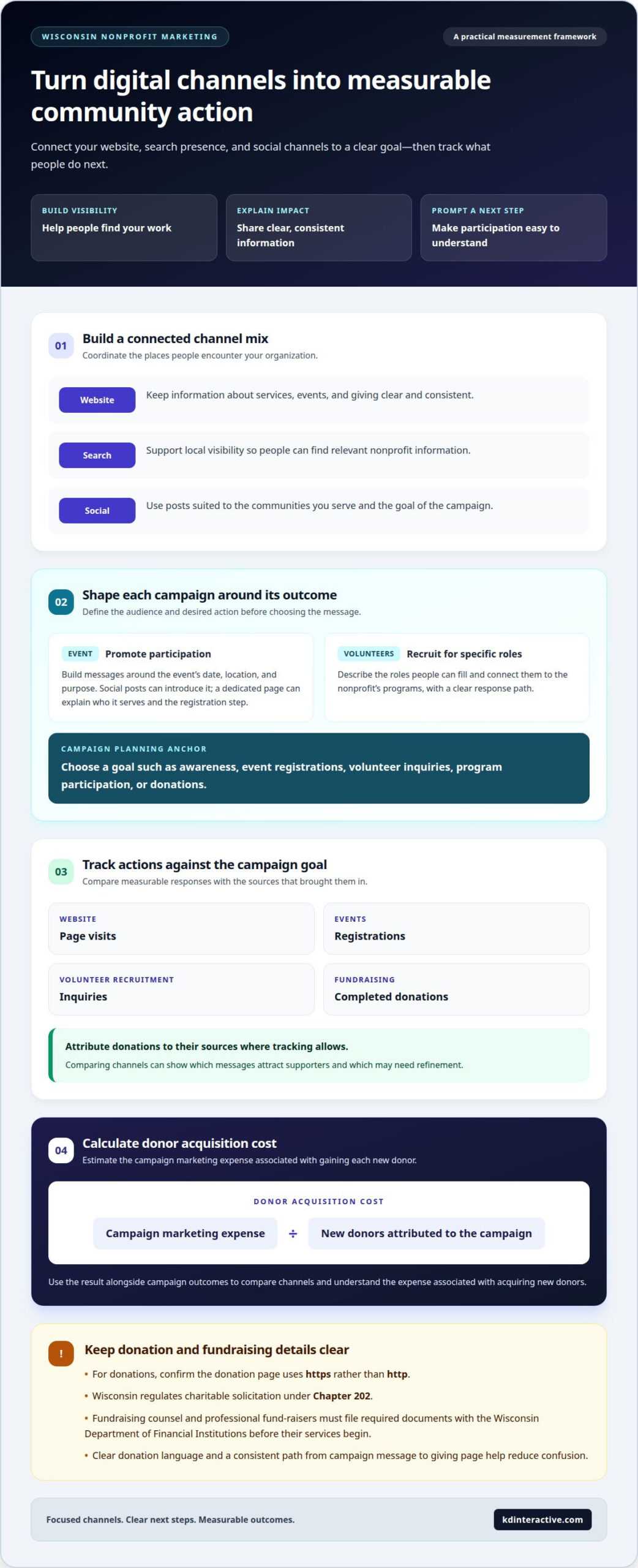
Digital channels are online platforms that help nonprofits share information and reach supporters. A professional can coordinate website content, search visibility, and social posts so people find consistent details about services, events, and giving. For donations, supporters should confirm the donation page uses “https” rather than “http.” Wisconsin regulates charitable solicitation under Chapter 202, according to Wisconsin Legislature. Clear donation language and a consistent path from campaign message to giving page help reduce confusion.
Promoting Events and Recruiting Volunteers
Event and volunteer promotion uses targeted messages to turn local interest into participation. A marketing professional can build an event campaign around its date, location, purpose, and registration step. For example, social posts can introduce a community event, while a dedicated page explains who it serves. Volunteer messages can describe specific roles and connect them to the nonprofit’s programs. This helps Wisconsin organizations reach people interested in supporting local families and community needs.
Marketing Results and Donor Acquisition Costs
Marketing results are measurable actions that show whether a campaign supports its goal. Track webpage visits, event registrations, volunteer inquiries, and completed donations against campaign sources. Donor acquisition cost estimates the marketing expense associated with gaining each new donor. Calculate it by dividing campaign marketing expense by the number of new donors attributed to that campaign. Comparing channels can reveal which messages attract supporters and which need refinement. Attribute donations to their sources where tracking allows.
How much do nonprofit marketing services cost in Wisconsin?
A nonprofit marketing budget is the amount set aside for promoting an organization’s mission and activities. In Wisconsin, professional marketing costs depend on the work involved, not simply on nonprofit status. The price depends on the case and is given after a quote request; scope, channel mix, content volume, campaign duration, and reporting needs shape it. A focused event campaign and an ongoing program promotion require different plans.
Separate professional work from campaign expenses. A project may involve planning, content development, publishing, and performance reporting; paid promotion can add another expense. For example, promoting a community event may call for event messaging and a landing page, while volunteer recruitment needs role-specific content and a clear response path. Defining the audience and desired outcome helps shape a workable scope.
Wisconsin Joint Effort Marketing grants for new events can cover up to 75% of promotional costs in the first year. That figure describes eligible promotional costs, not the price of a marketing professional’s services. For an organization planning an event, grant support may affect how much promotional activity it can fund. The campaign plan still needs to match the event’s purpose, audience, and approved expenses.
Before requesting a proposal, gather the details that determine the work: campaign goal, target communities, channels, existing content, and reporting needs. Decide whether the priority is event attendance, volunteer inquiries, program awareness, or donor growth. Then separate essential work from optional additions. A defined scope makes proposals easier to compare and helps avoid spending effort on channels that don’t support the goal.
For a practical starting point, outline the audience and outcomes before shaping a Wisconsin nonprofit visibility and content plan. That gives the project a clear basis for estimating its scope and directing marketing resources.
In Wisconsin, fundraising counsel and professional fund-raisers must file required documents with the Department of Financial Institutions before their services begin. Account for this compliance step when planning.
How can a marketing professional manage Google Ad Grants for Wisconsin nonprofits, and what eligibility rules apply?
Google Ad Grants is a Google program that supports eligible nonprofits’ search advertising. A marketing professional can assess whether it fits a Wisconsin organization’s goals, then manage campaign planning, ad content, and performance review.
Eligibility rules are Google’s requirements for participating organizations and accounts. Because requirements can change, review Google’s current criteria before treating a nonprofit as eligible or planning around grant advertising. The assessment should distinguish organizational eligibility from account readiness. A nonprofit’s mission, legal status, website, and proposed use of advertising all inform the review. Treat approval as a prerequisite, not something to assume from nonprofit status alone.
Once eligibility is established, plan campaigns around the organization’s priorities. A Wisconsin food pantry, for example, might want nearby residents to find service information, while an arts nonprofit may promote community programs. Map those goals to search themes, write relevant ads, and connect each ad to a useful page. The page should clearly explain the program and its next step, such as learning about services or registering interest.
Ongoing management connects search activity with meaningful outcomes. Review which searches bring relevant visitors, whether landing pages address the advertised need, and whether people take the intended action. If a campaign attracts clicks but few useful inquiries, refine the message, search targeting, or destination page. Reports can show what the grant campaign contributes without treating ad activity as mission impact by itself.
Before launch, provide the organization’s mission details, program descriptions, priority audiences, and existing web pages. A marketing professional can align campaign structure and content with those materials while keeping eligibility review separate from ongoing optimization. This gives Wisconsin nonprofits a clear sequence: assess program fit, prepare the account and pages, launch focused campaigns, and review results against organizational goals.
How can a marketing professional select Wisconsin media outlets, directories, and community platforms to reach local donors?
Local media outlets are news organizations that share stories with audiences in a defined area. Match the nonprofit’s mission and geography with relevant coverage, rather than choosing outlets by name recognition alone. Wisconsin Public Radio may suit a statewide story, while a neighborhood newspaper can spotlight a local fundraiser or program. A pitch should offer a clear community angle, useful details, and an available spokesperson.
Nonprofit directories are listings that help people find organizations by cause or location. A professional reviews directories relevant to the nonprofit’s work, then prepares consistent descriptions, contact details, and program information. United Way 211 Wisconsin is an example of a resource people use to find community services. A listing can be especially relevant when the organization provides direct assistance or connects families with local support.
Community platforms are online spaces where residents and local groups exchange information. Facebook groups, neighborhood association pages, and community calendars can surface an event to people already connected to a place or cause. A marketing professional adapts the message to each platform: a concise event notice suits a calendar, while a fuller story can explain why a neighborhood program matters. Respect each group’s posting rules and audience expectations.
Choose outlets based on the donor community, not a generic list. A Milwaukee organization seeking local supporters may prioritize Milwaukee-area news and community networks; a statewide nonprofit may favor broader coverage and directories. Consider geographic reach, audience fit, editorial relevance, and whether the platform accepts the type of announcement. A press release can support a timely milestone, while recurring community listings can keep core services discoverable.
Build a channel plan around a specific story, such as a new family resource or volunteer-led initiative. Prepare consistent facts and tailored copy for each placement. Plan local nonprofit media outreach with messaging suited to Wisconsin communities and the people you aim to reach.
KD Interactive
KD Interactive can help Wisconsin nonprofits strengthen digital visibility and share mission-focused messages with local audiences. Turn to the team when your organization needs a clearer search strategy, consistent content, or support promoting a community announcement.
SEO Keyword Analysis can identify relevant search terms, while Local SEO Services can support visibility among people seeking nearby programs. Content Creation helps communicate services and impact; Press Release Distribution can extend the reach of timely organizational news. The right combination depends on your goals, audience, and existing marketing materials.
Share your priority audience, key programs, and desired outcomes to shape a focused approach. Contact KD Interactive to discuss your nonprofit’s marketing needs.
Build a Sustainable Path to Community Support
Thoughtful marketing for non-profit organizations in Wisconsin starts with a clear mission priority and a plan your team can maintain. Choose the audience you most need to reach, then align communications with the action you want them to take. Regular performance reviews can help refine your message as community needs and program priorities evolve.
KD Interactive can support this work with Local SEO Services, Content Creation, and Press Release Distribution. These services can help nonprofits strengthen local discoverability, communicate their work clearly, and share timely organizational news. Start with a focused conversation about your goals, audiences, and current marketing challenges.
Contact KD Interactive about nonprofit marketing to discuss a practical path forward. Your mission deserves clear communication and a thoughtful strategy, and steady progress can begin with one well-chosen next step.
Frequently Asked Questions
What marketing strategies can a professional use to help nonprofit organizations in Wisconsin?
Tailor messaging to different supporter groups and the actions each group can take. For example, a first-time donor may respond to a clear explanation of a program’s impact, while an existing supporter may value a timely progress update. A campaign calendar can coordinate messages with seasonal needs and organizational priorities. Reviewing responses helps refine future communications without treating every supporter alike.
How can a marketing professional improve local SEO and Google Business Profile visibility for Wisconsin nonprofits?
A marketing professional can align a nonprofit’s Google Business Profile with accurate, consistent information across its website and local listings. This includes reviewing the organization’s public name, contact details, service descriptions, and relevant Wisconsin locations. The professional can also connect the profile to useful pages explaining programs, then monitor profile interactions and local search visibility. Clear, current information helps people understand whether the nonprofit serves their community and how to learn more.