
Does the thought of choosing how to advertise your company feel overwhelming? You’re not alone. For many business owners, the sheer number of options-from social media and Google Ads to local SEO-can be paralyzing. The biggest fear is sinking your hard-earned budget into a strategy that doesn’t deliver results, especially when you’re not even sure how to measure success. We understand this struggle because we’re a small business, too. Every marketing dollar has to count, and every decision needs to lead directly to growth.
That’s why we created this guide. Forget the confusion and uncertainty. Here, we’ll break down the most effective paid and organic advertising methods for 2026 in a clear, straightforward way. You will discover a practical framework for choosing the right channels for your specific goals and budget. By the end, you’ll have the actionable steps and confidence you need to invest wisely, track your results, and turn your advertising into a powerful engine for success.
Key Takeaways
- Learn the critical difference between paid ads that “rent” attention and organic strategies that build a long-term asset for your brand.
- Discover a practical framework to select the right advertising channels that align perfectly with your specific budget and business goals.
- Identify the most effective paid platforms to advertise company services and generate immediate leads and sales for your business.
- Stop guessing and start measuring; learn which key metrics track your advertising success and prove your return on investment.
The Two Pillars of Modern Advertising: Paid vs. Organic
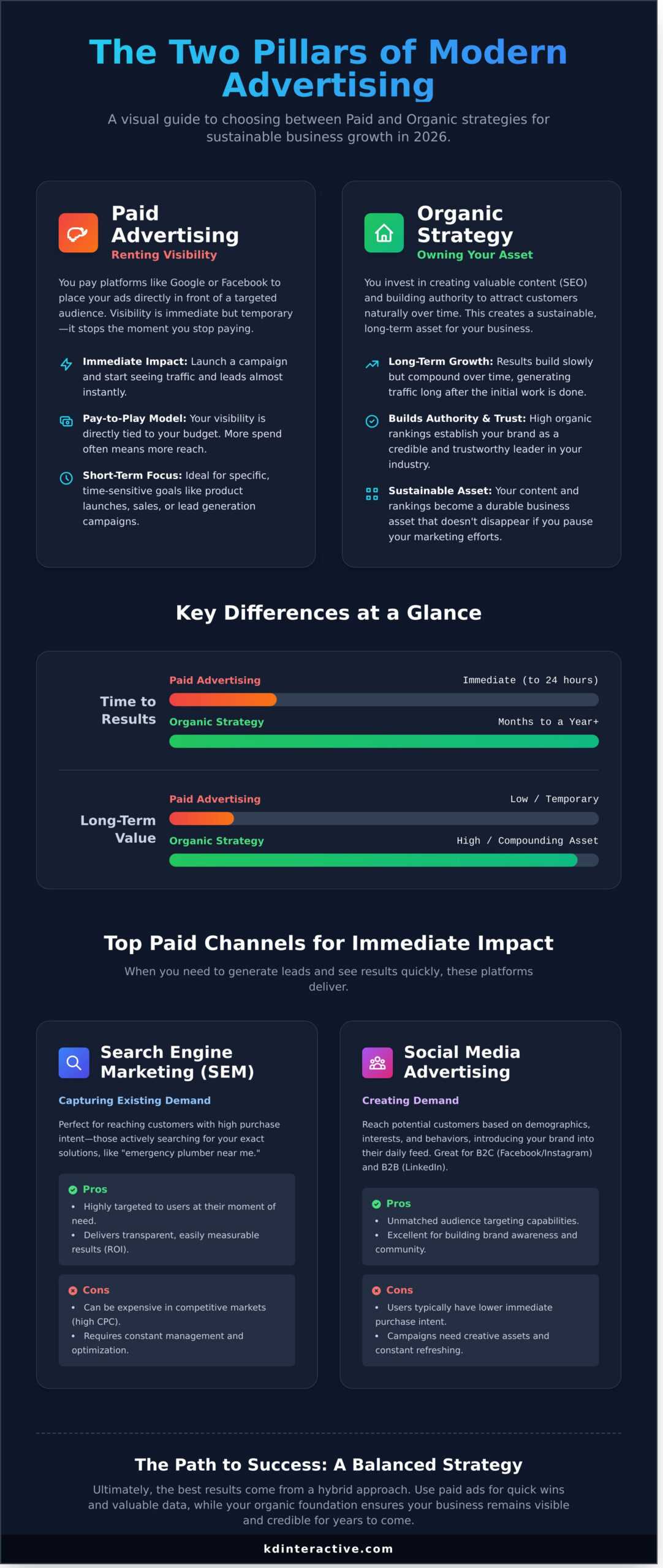
When you decide to advertise your company online, you’re faced with a fundamental choice that’s a lot like deciding between renting a house and owning one. Understanding the two pillars of modern advertising-paid and organic-is the first step toward building a strategy that delivers real, measurable growth. One offers immediate results for a price, while the other builds lasting value over time. The most successful businesses don’t just pick one; they understand how to use both to their advantage.
What is Paid Advertising?
Think of paid advertising as renting visibility. You pay platforms like Google, Facebook, or LinkedIn to place your ads directly in front of a targeted audience. The primary benefit is speed; you can launch a campaign and start seeing traffic almost immediately. However, this visibility is temporary. The moment you stop paying for those ads, your traffic disappears. It’s a powerful tool for short-term goals, like promoting a sale or a new product launch.
What is Organic ‘Advertising’?
Organic marketing, primarily driven by Search Engine Optimization (SEO), is like owning your visibility. Instead of paying for placement, you invest in creating valuable content, optimizing your website, and building authority. This approach attracts customers naturally over time. While it’s not “free”-it requires a significant investment in time, strategy, and expertise-the result is a sustainable asset that generates traffic long after the initial work is done.
Key Differences at a Glance: Cost, Speed, and Longevity
Choosing the right way to advertise your company depends entirely on your goals. Do you need customers today, or are you building a foundation for the next five years? This simple table breaks down the core differences:
| Factor | Paid Advertising (Renting) | Organic ‘Advertising’ (Owning) |
|---|---|---|
| Time to See Results | Immediate to 24 hours | Months to a year+ |
| Long-Term Value | Low; traffic stops when payment stops | High; creates a compounding, lasting asset |
| Cost Model | Pay-per-click or impression (ongoing) | Upfront and ongoing investment of time/resources |
Ultimately, a balanced strategy often yields the best results. Paid ads can deliver quick wins and valuable data, while a strong organic foundation ensures your business remains visible and credible for years to come.
Top Paid Advertising Channels for Immediate Impact
When you need to generate leads and see immediate results, paid advertising is often the first tool business owners reach for. Platforms like Google and Facebook offer powerful ways to advertise company products and services, but they aren’t magic. Success requires a solid plan. Before spending a dollar, you must have a clear budget and a deep understanding of your target audience. Resources from the U.S. Small Business Administration on How to Choose the Right Advertising Strategy can provide an excellent foundation for this crucial planning stage.
For most small businesses, the conversation starts with three dominant platforms.
Search Engine Marketing (SEM) with Google Ads
Search Engine Marketing is all about capturing existing demand. It’s the ideal way to advertise company services to users with high purchase intent because you are reaching people who are actively searching for your solutions. This is perfect for businesses whose customers know what they need, such as someone searching for “emergency plumber near me” or “Milwaukee business accountant.”
- Pros: Highly targeted, connects with users at the moment of need, and delivers transparent, measurable results.
- Cons: Can become expensive in competitive markets and requires consistent management to maintain a positive return on investment.
Social Media Advertising (Facebook, Instagram & LinkedIn)
Unlike search ads, social media advertising is about creating demand. You reach potential customers based on their demographics, interests, and professional profiles, introducing your brand into their daily feed. Facebook and Instagram are powerhouses for B2C businesses, while LinkedIn is the undisputed leader for B2B companies looking to connect with specific job titles or industries.
- Pros: Unmatched audience targeting capabilities and excellent for building brand awareness and community.
- Cons: Users typically have lower immediate purchase intent compared to those actively searching for a solution.
When to Prioritize Paid Advertising
While a long-term SEO strategy is crucial for sustainable growth, paid advertising is the go-to for speed and precision. It’s the right choice when your business needs to:
- Announce a new product launch or a time-sensitive promotion.
- Generate a high volume of leads or sales in a short timeframe.
- Quickly test new markets, messaging, or offers to gather valuable data.
Organic Channels: Building a Long-Term Advertising Asset
While press releases can offer a short-term boost, the most sustainable way to advertise company growth is by building digital assets you own. This is the strategy for compounding, long-term success. By focusing on organic channels, you stop “renting” attention and start building a powerful engine for trust and authority. Over time, this approach turns your website from a simple brochure into your most effective, 24/7 salesperson, consistently attracting and converting customers.
Local SEO: The Ultimate Tool for Local Advertising
For any Wisconsin business with a physical location or service area, Local SEO is non-negotiable. The goal is to appear in Google’s ‘Map Pack’-the three local business listings shown with a map when someone searches for a local service. This is prime digital real estate. Achieving this visibility requires a consistent, focused effort on key activities:
- Google Business Profile Optimization: Ensuring every section of your profile is complete, accurate, and updated.
- Citation Building: Creating consistent name, address, and phone number (NAP) listings across relevant online directories.
- Review Management: Actively encouraging and responding to customer reviews to build social proof.
Content Marketing: Attracting Customers with Expertise
Content marketing is about attracting customers by providing genuine value, not a sales pitch. By creating helpful blog posts, guides, and videos that answer your customers’ most pressing questions, you build immense trust. For example, a roofer who publishes an article on “5 Signs You Need a New Roof” immediately positions themselves as a helpful expert. This builds authority and ensures that when customers are ready to buy, you are top of mind. As you share your expertise, it’s crucial that all claims are backed by evidence, adhering to federal truth-in-advertising laws to maintain that hard-earned trust.
To expand your audience and tap into new markets, consider making your best-performing content multilingual. Professional document translation ensures your message resonates accurately with non-English speaking customers. For those exploring this growth strategy, resources like translators-usa.com can provide the necessary expertise for clear and effective communication.
Email Marketing: Nurturing Your Owned Audience
Unlike social media or search engines, your email list is an asset you have complete control over. It is the most direct and personal channel for communicating with your audience. Building an email list from day one is critical for nurturing leads and turning one-time customers into loyal, repeat business. It allows you to stay in touch, share valuable updates, and promote offers without being subject to the whims of an algorithm, giving you a reliable way to drive revenue on demand.
How to Choose the Right Advertising Strategy for Your Company
There is no magic bullet or single “best” way to advertise your company. The most successful marketing strategies are tailored, blended approaches built on a clear understanding of your specific business. We understand the struggles of small business-we know that every dollar has to be effective. This simple framework is designed to help you make pragmatic, results-oriented decisions that lead to real growth.
Step 1: Define Your Business Goals
Before you spend a dime, you must know exactly what you want to achieve. Are you looking for immediate sales or long-term brand recognition? Ask yourself:
- Is my primary goal to generate qualified leads and sales right now?
- Am I more focused on increasing brand awareness and authority in my market?
- Do I need to drive foot traffic to a physical storefront or boost online e-commerce sales?
Your answers point directly to the right channels. For instance, a pressing need for leads is often best served by Google Ads, while building brand awareness is a perfect fit for consistent social media engagement and press releases.
Step 2: Know Your Customer and Where They Spend Time
Your advertising is only effective if your ideal customers actually see it. You have to meet them where they already are. Are your potential customers actively searching on Google for the solutions you provide? If so, a strong SEO and PPC strategy is non-negotiable. Are they a younger demographic spending hours on TikTok or Instagram? Then a targeted social media advertising campaign should be a core part of your plan. Don’t waste your budget on platforms your audience ignores.
Step 3: Consider Your Budget and Timeline
Finally, your financial resources and timeline are critical factors. If you need to generate revenue quickly to meet short-term needs, a dedicated paid advertising budget is often the fastest path to results. These campaigns can be launched quickly to drive immediate traffic and conversions.
For sustainable, long-term success, investing in organic channels like SEO is essential. Building your website’s authority is a powerful way to advertise company growth, creating a valuable asset that delivers consistent, high-quality traffic for years to come. Often, the most powerful strategy is a blend of both. Not sure where to start? Get a free, no-obligation consultation.
Measuring Success & Why an Expert Partner is a Game-Changer
Throwing money at a marketing tactic without tracking the results is a guaranteed way to waste it. When you decide to advertise company growth, you’re not just spending money; you’re making an investment. And like any smart investment, you must measure its performance. A press release, a Google Ad, or an SEO campaign is only successful if it contributes to your bottom line.
Understanding what to measure and how to interpret the data is the difference between guessing and growing.
Key Metrics to Track for Any Campaign
Don’t get lost in vanity metrics. Focus on the numbers that directly impact your business’s health. A clear, simple dashboard is all you need.
- For Paid Ads: Track your Return on Ad Spend (ROAS), Cost Per Click (CPC), and Conversion Rate. These tell you exactly how much revenue each dollar you spend is generating.
- For SEO & Organic Content: Monitor keyword ranking improvements, growth in organic website traffic, and most importantly, the number of qualified leads coming directly from search engine results.
The True Cost of a DIY Approach
The learning curve for digital marketing platforms is steep, and a simple mistake in campaign setup can burn through your budget with zero results. But the biggest cost isn’t financial-it’s your time. Every hour a busy business owner spends wrestling with ad platforms is an hour not spent serving customers and leading their team.
This complexity is why many growing businesses, especially startups aiming for significant scale, turn to performance marketing agencies for expertise. A specialized partner like KPI Media can manage these intricacies, allowing leadership to focus on core business operations while ensuring the marketing budget drives measurable growth.
The Value of a Strategic Marketing Partner
This is where a dedicated partner makes all the difference. Instead of focusing on a single tactic, an expert creates a holistic strategy that uses the right mix of channels to achieve your specific goals. We handle the complex technical details-from keyword research to campaign analytics-so you can focus on what you do best. We understand the challenges Wisconsin businesses face because we are one. We know what it takes to build a successful marketing plan that drives real, measurable growth in our local communities.
Ready to see a real return on your marketing investment? Let’s talk about a strategy that works for you.
Turn Your Advertising Strategy into Action
As this guide has shown, the key to success in 2026 is a balanced strategy. You need the immediate impact of paid ads combined with the long-term asset of organic growth. Choosing the right channels and measuring your results is what separates the businesses that struggle from those that succeed. This is how you effectively advertise company growth.
You don’t have to figure it all out alone. We understand the struggles of small business, because we are one! As local SEO experts focused on your success, we build transparent, results-oriented strategies for Wisconsin businesses just like yours. We succeed only when you succeed.
Ready to stop guessing and start growing? Take the next step today.
Help my business grow! Get Your FREE Consultation Today.
Frequently Asked Questions
How much should a small business spend on advertising?
Deciding how much to spend to advertise your company depends on your industry and growth goals. As a general rule, many small businesses allocate 7-12% of their total revenue to their marketing and advertising budget. Newer businesses or those in a rapid growth phase might invest more to gain market share, while more established companies may spend less. The key is to set a budget that is sustainable and tied directly to measurable business objectives and results.
How long does it take to see results from advertising?
The timeline for seeing advertising results varies by channel. With pay-per-click (PPC) platforms like Google Ads, you can see traffic and leads almost immediately-within days or weeks of launching a campaign. In contrast, strategies like SEO and content marketing are long-term investments. It often takes three to six months to see significant, lasting improvement in organic rankings and traffic. A balanced approach often yields the best results, combining short-term wins with long-term growth.
What’s the difference between marketing and advertising?
Think of marketing as the entire strategy for reaching customers, while advertising is just one piece of that strategy. Marketing includes everything from market research and branding to SEO and customer relations. Advertising is the specific, paid promotion within your marketing plan-like running a Google Ad or a sponsored post on Facebook. In short, advertising is a single tactic, whereas marketing is the overall game plan designed to grow your business and connect with your audience.
Can I advertise my company for free?
Yes, you can advertise your company for free, but it requires an investment of your time and effort instead of money. Great free methods include optimizing your Google Business Profile to attract local searchers, consistently posting valuable content on social media, and encouraging customer reviews. These organic strategies are powerful for building a strong online foundation and establishing trust with potential customers in your community without a direct ad spend. It’s about earning attention rather than buying it.
Is local SEO a form of advertising?
While local SEO and advertising share the goal of increasing visibility, they are technically different. Advertising involves paying for placement, like with Google Ads. Local SEO, our specialty here in Wisconsin, is a marketing discipline focused on earning free, organic placement in search results. It’s about optimizing your website and online presence to show up when local customers are searching for your services. It’s a powerful, long-term asset that builds trust and authority in a way paid ads can’t.
Which is better for my business: Google Ads or Facebook Ads?
The best choice depends on your customer’s journey. Google Ads are powerful for capturing intent-reaching customers who are actively searching for your product or service right now. It’s about meeting an existing demand. Facebook Ads are better for creating demand by targeting users based on their interests and behaviors, even if they aren’t actively looking. We often find that a combined strategy, tailored to your specific goals, delivers the most comprehensive and measurable growth for our clients.