
A local brand earns loyalty through more than a recognizable logo. Building a local brand that customers love means expressing what your business stands for consistently, then backing that identity with useful experiences and genuine connections in the community. Branding is the way customers recognize and understand your business, from its visual identity and messages to the stories people share about it.
It’s understandable to focus first on getting noticed, but lasting recognition comes when customers see the same values in your communications and their experience with your business. This article explains how to shape a clear brand identity, share customer stories thoughtfully, and use local marketing to strengthen community ties. You’ll also learn how local search visibility can help nearby customers find you, and why listening to feedback matters when you want first visits to become lasting relationships.
Key Takeaways
- Build community connections through local events, useful workshops, and partnerships that reflect your business’s values.
- Make your visual identity and messaging consistent so customers can recognize your business across different touchpoints.
- Share customer stories and testimonials with permission to show what working with your business is like.
- Use locally relevant content and search optimization to help nearby customers discover your business and stay connected.
1. Why Is Local Marketing Important to Building Customer Loyalty?
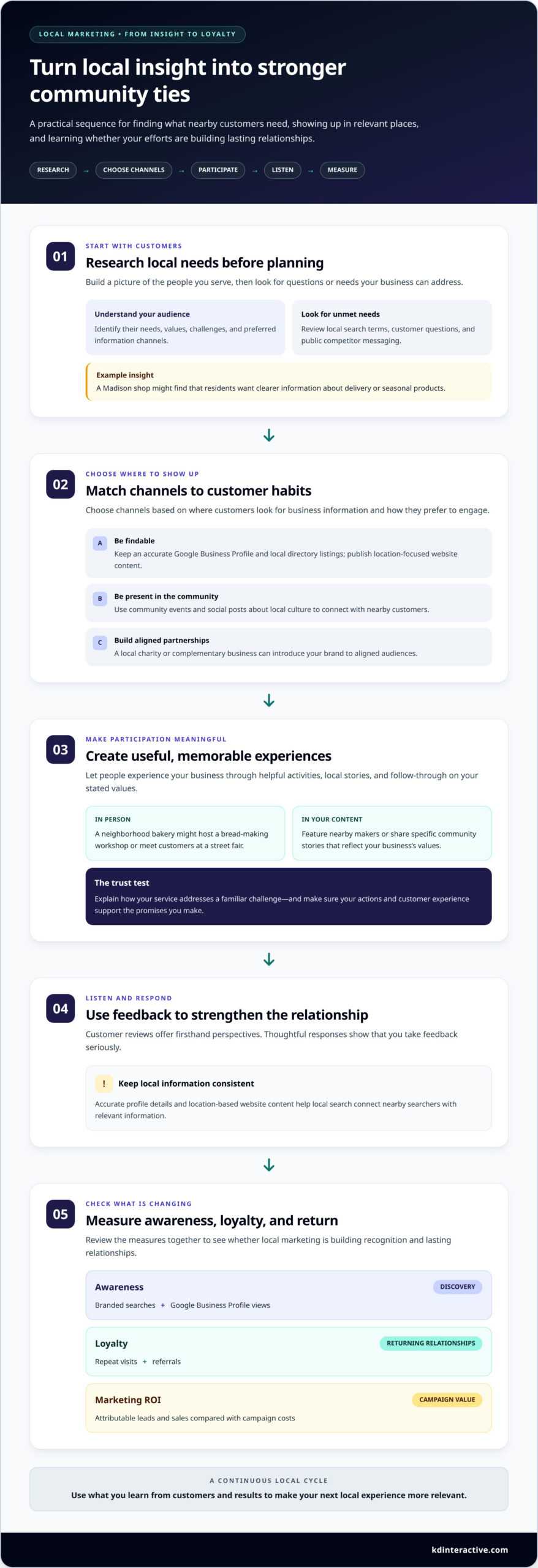
Local marketing connects a business with residents through useful, visible participation. A neighborhood bakery, for example, can host a bread-making workshop, meet customers at a street fair, and feature nearby makers in its stories. These experiences give people reasons to remember the business beyond a single purchase and turn shared interests into community ties.
Start customer research by identifying your audience’s needs, values, challenges, and preferred information channels. Then review local search terms, customer questions, and public competitor messaging to spot unmet needs. A Madison shop might learn that residents want clearer information about delivery or seasonal products. Use those insights to make your content and events relevant instead of guessing what will bring people in.
For small businesses, a practical channel mix includes an accurate Google Business Profile, local directories, location-focused website content, community events, and social posts about local culture. Choose channels based on where customers look for business information and how they prefer to engage. In-person events, such as a farmers’ market booth or a workshop tied to your expertise, create direct conversations. Partnerships with a local charity or complementary business can introduce your brand to aligned audiences.
Customers are more likely to love and trust a local brand when its actions reflect its stated values. Share specific community stories, explain how your service addresses a familiar challenge, and follow through on promises. A local bookstore might spotlight a neighborhood reading group, with permission, and explain how the group contributes to its community.
Google Business Profile reviews offer firsthand customer perspectives, while thoughtful responses show that you take feedback seriously. Accurate profile details and location-based website content also help local SEO connect nearby searchers with relevant information. Track awareness through branded searches and profile views, loyalty through repeat visits and referrals, and marketing ROI through attributable leads and sales compared with campaign costs. Reviewing these measures together can show whether local marketing builds recognition and lasting relationships.
2. Consistent logos, colors, business names, and messaging
A strong brand foundation defines who the business serves, what it values, and what makes its work distinct. A neighborhood repair shop, for example, might emphasize dependable service and clear explanations. That purpose should shape its logo, colors, tone, and customer experience, giving people a consistent connection to the business.
Apply the same identity across your website, social platforms, printed materials, and local listings. Spell the business name consistently on Google and Yelp, and use the same core logo and colors in each place. If a listing shows an old name while a storefront sign uses a new one, customers may not realize both represent the same business.
Make your business story specific and useful. Explain why you opened the shop, which local need it addresses, and what customers can expect. A bicycle store could describe its focus on helping commuters find practical repairs and equipment. With a complementary local business, it could create a joint campaign that introduces both brands to relevant audiences without blurring their identities.
Brand foundations should evolve with the business. Revisit yours annually: review customer research, changes in your services, and feedback about how people describe the business. If a café adds catering, for instance, its messaging can expand while keeping its familiar name, color palette, and values. Update materials together so old and new messages don’t compete across platforms.
How much should a small local business budget for branding and marketing? Set an amount that fits your capacity and goals, then prioritize essentials such as a clear identity, accurate listings, and consistent campaigns. The right allocation depends on the work required and the channels your audience uses, so review results before expanding your efforts.
Avoid changing your logo or message so often that customers can’t recognize the business, and don’t make promises the experience can’t support. For a practical connection between consistent brand information and local search visibility, consider local SEO support.
3. Customer testimonials and user-generated content
Customer stories make a business’s service easier to picture. Invite satisfied customers to describe what they needed, what they experienced, and what changed afterward. A neighborhood florist might share a customer’s account of choosing arrangements for a family celebration. Ask permission before sharing names, photos, or quotes, and preserve the customer’s meaning when editing.
Authenticity matters to an audience weighing which brands to support. A Stackla study found that 88% of consumers considered authenticity important in that decision. Use specific, accurate testimonials instead of broad claims such as “the best in town.” Share the reviewer’s words with context, and respond to criticism calmly. That approach helps social media posts stand out through real experiences, not inflated promises.
Behind-the-scenes content can show your personality through familiar details. A local pottery studio could post a short clip of a maker preparing clay, explain a common glazing challenge, or introduce the person packing orders. These snapshots help customers understand the care behind a product. They also give successful customer stories a human setting, making the brand easier to remember.
Interactive content gives people a reason to participate. A garden center could use a short survey to learn which plants customers struggle to grow, then share answers in a helpful post. A quiz about choosing herbs for a sunny windowsill can spark comments and provide useful audience insights. Use responses to shape future content, rather than treating engagement as the only goal.
Localize each story to the community it serves. A business with customers in nearby towns can feature distinct seasonal traditions, neighborhood events, or local customer needs while keeping its core voice consistent. For shareable content, pair a customer quote with a clear photo and a short explanation of the result. Credit the customer, invite them to share the post, and track which stories lead to meaningful conversations or inquiries. This turns social proof into useful feedback about what resonates locally.
4. Local marketing and customer loyalty
Local marketing supports customer loyalty when it connects discovery with a dependable experience. A neighborhood café can share nearby event details, make its hours easy to find, and welcome returning customers consistently. Building a local brand that customers love means turning these practical moments into a relationship residents have reason to choose again.
Make local discovery useful. Keep Google Business Profile details current, create website content around the places and needs you serve, and explain what customers can expect before they visit. A home services business, for example, can clearly describe its offerings and the communities it serves. Accurate, relevant information helps potential customers decide whether the business meets their needs.
Customer experience turns that first discovery into repeat business. Ask for feedback after a purchase, look for recurring requests, and make practical improvements. A bookstore might respond to requests for easier event registration by simplifying its sign-up process. Clear service information, thoughtful follow-through, and a welcoming in-person experience can encourage customers to return and recommend the business.
How can local businesses improve customer experience and encourage repeat purchases? Make each step convenient, listen to customer feedback, and act on suggestions that come up repeatedly. For example, a neighborhood shop could clarify pickup instructions and share updates when an order is ready.
Community partnerships can reinforce loyalty when they offer genuine value. A local retailer might team up with a complementary business for a shared event, or support a community organization whose work aligns with its values. Keep the customer benefit clear, then assess whether the activity leads to useful conversations, repeat visits, or referrals. A focused local search strategy can help residents find accurate business information. Strengthen your local search visibility and keep building a local brand that customers love.
KD Interactive: Local SEO Services
KD Interactive helps small businesses strengthen local visibility through Local SEO Services and Content Creation. Turn to these services when nearby customers have trouble finding your business online or when your website content doesn’t clearly reflect what you offer and where you serve.
SEO Keyword Analysis can identify relevant search terms for your business and local audience, helping you create focused website content. Press Release Distribution can help share business news with a wider audience. Together, these services connect a clear brand message with local search discovery while keeping your business information and content aligned with your goals.
To connect your local brand with nearby customers, contact KD Interactive.
Turn Your Local Brand Into a Lasting Connection
Choose a next step based on what customers need from your business now. You might clarify how your service solves a common problem, make your local information easier to find, or create a better way to share customer feedback. Building a local brand that customers love is ongoing work: let customer needs guide each improvement, then pay attention to how people respond.
KD Interactive supports this work with Local SEO Services, Content Creation, and Press Release Distribution. These services can align your local visibility, useful content, and business news with the audience you want to reach. A focused plan gives your next marketing effort a clear purpose and makes it easier to assess what resonates.
Contact KD Interactive to discuss a practical next step for your local brand. Keep listening, keep improving, and build on the trust your community already places in your business.
Frequently Asked Questions
What is branding?
Branding is the set of impressions that helps people recognize and understand a business. It includes the business name, visual style, communication, and customer experience. For a local tax preparer, clear explanations and a consistent, approachable presentation can distinguish the business from a generic listing. Strong branding makes a business easier to remember and gives customers a clearer sense of what to expect.
Why Is Local Marketing Important to Building Customer Loyalty?
Local marketing connects a business with nearby customers through information and experiences relevant to their needs. It can support loyalty by making it easier for residents to discover a business, understand its services, and return when they need them again. For example, a neighborhood pet groomer could share clear appointment details and seasonal care guidance, giving local customers a useful reason to keep the business in mind.
How can a local business define its brand identity and unique value proposition?
Define the business identity by clarifying who it serves, what problem it solves, and what customers value about its approach. Then express the difference in one specific, supportable statement. A neighborhood tax preparer might focus on explaining filing steps in plain language for first-time filers. Customer questions and feedback can reveal whether that message reflects a real need and feels distinct from other local options.
What are effective ways to build community partnerships and local word of mouth?
Choose a partner whose audience and purpose complement the business, then create a clear shared benefit. A pet groomer could coordinate an adoption-day offer with a local animal rescue, while each partner explains the event to its own customers. Afterward, thank participants, share the community outcome with permission, and make it easy for satisfied customers to recommend the business through a personal introduction.
Which local marketing channels deliver the best results for small businesses?
Useful channels include an accurate Google Business Profile, local directories, location-focused website content, community events, and social posts about local culture. Choose the mix based on where customers look for information and how they prefer to engage.