A busy service window starts with more than a good menu. The best food truck marketing ideas help nearby customers notice your truck, recognize your brand, and find your current location. Social media, distinctive branding, local partnerships, and print promotions can all turn local awareness into visits.
Running a food truck means balancing promotion with serving customers, so give each marketing effort a clear purpose. This guide covers practical ways to share your location and menu, create a memorable identity, connect with local businesses and events, and use printed materials to stay visible. You’ll also learn how to choose tactics that suit your truck and community, then track which ones bring people to your window.
Key Takeaways
- Use social media to make your truck’s location, menu, and personality easy for nearby customers to discover.
- Build a recognizable brand that customers can remember across your truck, online posts, and merchandise.
- Explore partnerships with local wineries, beer gardens, and microbreweries to connect with new audiences.
- Choose print promotions that give people a clear reason to notice your truck and take action.
1. What social media platform is best for food trucks?
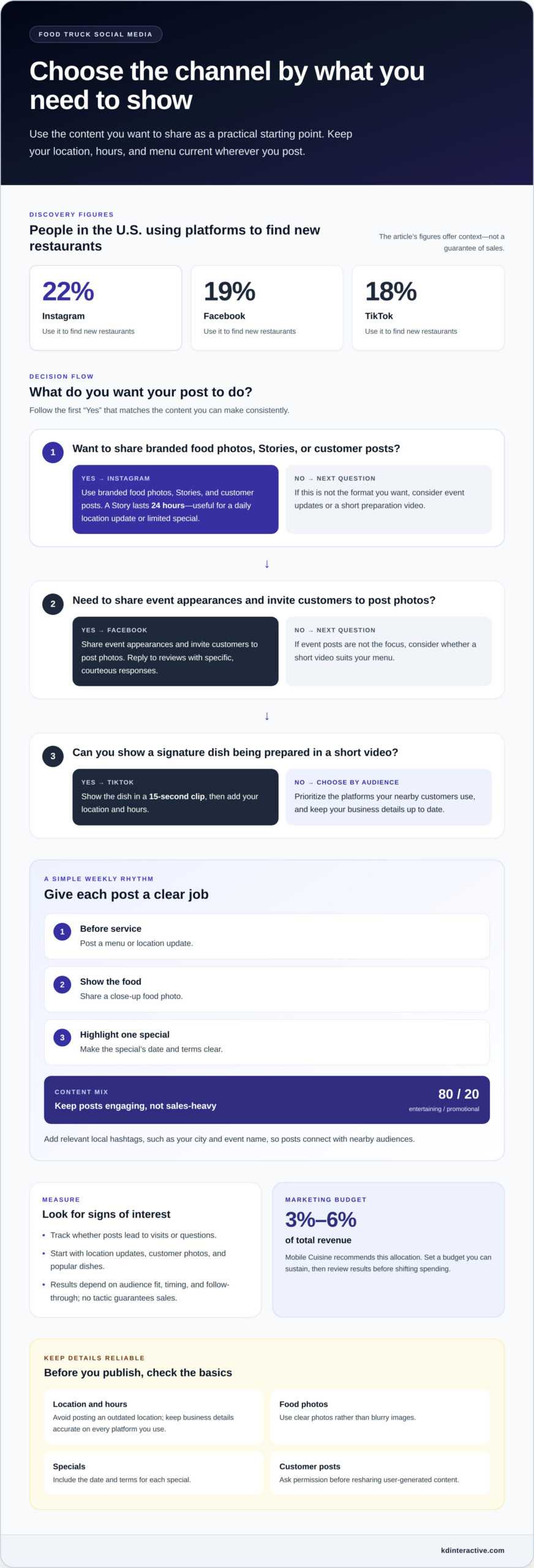
Instagram is a strong starting point: 22% of people in the United States use it to find new restaurants. Facebook follows at 19%, and TikTok at 18%. Choose platforms your nearby customers use, then keep your social media presence current with locations, hours, and menu updates. Each platform can help people spot your truck before they decide where to eat.
Use Instagram for branded food photos, Stories, and customer posts. A Story lasts 24 hours, making it useful for a daily location update or limited special. On TikTok, show a signature dish being prepared in a 15-second clip, then add your location and hours. On Facebook, share event appearances and invite customers to post photos. Ask permission before resharing user-generated content, and reply to reviews with specific, courteous responses.
Plan a simple weekly schedule: post a menu or location update before service, share a close-up food photo, and highlight one special. Keep the mix engaging, not sales-heavy: an 80/20 split of entertaining and promotional posts gives followers useful content alongside offers. Add relevant local hashtags, such as your city and event name, so posts connect with nearby audiences. A consistent schedule helps customers know when to look for updates.
Which tactics offer the best return on investment? Start with location updates, customer photos, and posts featuring popular dishes, then track which posts lead to visits or questions. No single tactic guarantees sales; results depend on audience fit, timing, and follow-through. Mobile Cuisine recommends allocating 3% to 6% of total revenue to marketing. Set a budget you can sustain, then review results before shifting spending.
The most effective food truck marketing ideas make it easy to find and choose your truck. Avoid posting an outdated location, blurry food photos, or a special without its date and terms. Keep review responses timely and business details accurate on every platform you use. For a stronger content plan, build a week of posts around one appearance, with the location, hours, a dish photo, and a prompt for customers.
2. Memorable branding, logos, and merchandise
A clear visual identity helps people recognize your truck in a busy neighborhood. Start with a legible logo, a limited color palette, and type that’s readable from the sidewalk. Repeat the truck name and colors on the vehicle, menu board, packaging, and catering materials. Consistent branding makes each customer interaction feel connected.
Design for quick decisions. Place the truck’s name where people can see it from the queue, and make the menu easy to scan. Carry the same colors or logo onto packaging, such as a sticker on a takeout box. Keep key details consistent across signs and menus so customers know they’ve found the right business.
Merchandise can keep your brand visible after service hours. Choose useful items that suit your audience, such as reusable cups, stickers, or shirts with a recognizable logo. Offer them at an event or include a sticker with an order. These items give regular customers a simple way to show loyalty and help new visitors remember your truck.
Keep your brand coherent as the business grows. Before changing a logo or adding a menu design, compare it with your existing signs, packaging, and social profiles. A seasonal special can introduce fresh artwork while retaining familiar colors and the truck name. Returning customers can then recognize what’s new without confusing it with another business.
Rules for signs, flyers, and promotions vary by city and event venue in the United States. Before displaying a sign or distributing flyers, review the applicable local and venue requirements, including where materials may be placed. For polished menus and promotional copy that match your visual identity, consider consistent brand messaging as the next step.
3. Partnerships with wineries, beer gardens, and microbreweries
Partnering with a local winery, beer garden, or microbrewery connects your menu with an established gathering place. Propose a clear arrangement: your truck serves food at a scheduled event, and the venue promotes your appearance. For example, pair a winery tasting with a menu item that suits the setting. Agree on the date, service area, promotion responsibilities, and contact person before announcing the collaboration.
Events can introduce your truck to customers who might not find it on your regular route. Food trucks often gather near one another at events, giving visitors several food options. Consider outdoor weddings, small gatherings, and other outdoor events. Ask the organizer about expected attendance and service logistics, then choose an event that suits your menu and the occasion.
Make each cross-promotion easy to share. Give the partner a short description, menu highlights, and accurate event details. Promote your appearance through your social channels, including Facebook, and ask the venue to share the same announcement. A shared post or event listing gives customers one reliable place to find the time, location, and food options.
Neighborhood businesses can create useful, repeatable partnerships too. A nearby brewery might host a regular food night, while a local office could arrange catering for a staff gathering. Offer a simple menu suited to the setting, and clarify ordering, setup, and service expectations with the host. This helps each business promote the collaboration without confusing customers about where or when to find you.
Follow up on each partnership. Note which event brought new visitors, which menu items sold, and whether customers asked about returning. Share your observations with the venue before planning another date. Seasonal ideas, such as a fall menu at a harvest event, can give both partners a fresh reason to promote the next appearance and attract returning guests.
4. Print advertising and promotional materials
Printed materials can turn a street-side encounter into a reminder customers can keep. Give each flyer one purpose, such as announcing a festival appearance or promoting a seasonal special. Include your truck name, a menu highlight, location, service time, and a clear next step. For example, a small handout can invite people to follow your Instagram account for schedule updates.
Make discounts specific and easy to understand. A music festival promotion could offer 10% off to customers who take a group photo, provided the offer’s terms are clear. In the United States, 87% of consumers say a credit, discount, or perk influenced them to reorder. Track which promotion customers use, then compare repeat visits and revenue with the offer’s cost.
Email promotions can complement print advertising when customers have opted in to updates. Send a brief message about an upcoming location, a new menu item, or a limited-time offer. An automated welcome note can explain how to find your schedule, while a message for returning customers can feature a relevant special. Keep each email focused, with the offer and its conditions easy to understand.
Connect print and digital promotion through one consistent campaign. For example, put a scannable code on a menu card that leads to your current schedule, then share the same event details on Instagram. Use consistent offer wording across flyers, posts, and emails. This helps customers recognize the campaign and makes it easier to see which channels engage them.
Start with one promotion, not several competing discounts. Record the offer, distribution location, redemption, and resulting sales in a simple tracking sheet. Review those details after the event, then keep, adjust, or stop the promotion. For focused campaign messaging and polished promotional materials, develop clear promotional content that gives customers a reason to act.
KD Interactive
KD Interactive helps food truck owners connect promotions with stronger local visibility. Turn to the team when customers have trouble finding your location, schedule, or menu in local search results. SEO Keyword Analysis identifies relevant search terms, while Local SEO Services support your visibility in local results. Content Creation can keep online information clear and useful, and Press Release Distribution can share news about events or openings. These services complement social posts, partnerships, and print promotions by making key details easier to discover online. Contact KD Interactive to discuss your food truck’s local marketing needs.
Make your next marketing move count
Give your next campaign one clear goal, such as bringing new visitors to an event or encouraging past customers to return. Use customer questions and feedback to shape what you promote next. That turns food truck marketing ideas into a practical cycle: choose a focus, communicate it clearly, and learn from the response.
If customers have trouble finding your truck online, stronger local visibility can support your next growth step. KD Interactive offers Local SEO Services, Content Creation, and Press Release Distribution to help food trucks improve how they appear and communicate online. These services complement your existing promotions with an approach shaped around your business priorities.
Build momentum one focused step at a time. Contact KD Interactive to discuss your marketing and identify a practical next move for your food truck.
Frequently Asked Questions
How do food trucks attract customers?
Food trucks attract customers by making the decision to visit simple and appealing. Keep the menu easy to understand, highlight a distinctive dish, and make your service location clear wherever customers look for updates. At a neighborhood event, for example, a concise menu board and a friendly sample can help passersby decide quickly. After service, note which dishes and locations drew the most interest.
How do I make my food truck stand out from competitors?
Give customers a clear reason to remember your truck, such as a signature dish, a distinctive flavor combination, or a menu built around a local ingredient. Explain what makes it different in one sentence. For instance, “handmade dumplings with Wisconsin-grown vegetables” tells people what sets the menu apart. Keep the signature offering consistent, and use customer feedback to refine its description and presentation.
What social media platform is best for food trucks?
Choose the platform that best matches how your customers discover food. Instagram suits businesses with strong food photography, while Facebook can help reach people following neighborhood events. TikTok may work well for a truck that can create engaging short-form content. You don’t need to manage every platform equally. Start where customers interact with your posts, then keep that account useful and active.
How can food trucks build a loyal customer base with rewards and email or SMS marketing?
Encourage repeat visits with a simple reward, such as a complimentary add-on after a set number of purchases. Explain the offer at checkout and make redemption easy. For email or text updates, invite customers to opt in and send useful messages, such as a schedule change or special menu. Keep communications relevant and respect each person’s preferences.
What are the best ways for food trucks to announce their locations and schedules?
Share schedule updates where customers already look for them, and keep the details consistent. Include the date, service hours, exact venue name, and any schedule changes. For a recurring market, announce your next appearance in advance and post a reminder on the day. If weather or logistics change your plans, promptly update the same channels so customers aren’t relying on outdated information.
How can food trucks improve their Google Business Profile and local search visibility?
Keep your Google Business Profile accurate, especially the business name, contact details, menu information, and customer-facing updates. Where the profile allows, describe your cuisine and the areas or events you serve. Invite satisfied customers to leave honest reviews and respond professionally to feedback. KD Interactive’s Local SEO Services help food trucks strengthen local search visibility and make it easier for customers to find them online.