
A bad review doesn’t have to damage trust; a defensive reply can. To learn how to handle bad reviews gracefully, respond calmly, acknowledge the customer’s experience, apologize when appropriate, and offer a constructive next step. Keep the conversation respectful and move sensitive details out of the public thread.
It’s understandable to feel frustrated when criticism seems unfair, but remember that future customers will read your reply too. A thoughtful response shows that you listen, take concerns seriously, and are willing to improve. This guide explains how to respond to positive and negative reviews, protect your credibility, and build a practical process for replying consistently.
Key Takeaways
- Pause before replying, verify the details, and keep your response calm, specific, and personal.
- Leave legitimate criticism visible; a measured reply can help readers assess how your business handles concerns.
- Thank customers for positive feedback and use recurring complaints to spot opportunities to improve.
- Set a regular review-checking routine so feedback doesn’t go unnoticed and replies stay consistent.
1. Keeping responses professional and personalized
A professional response thanks the reviewer, acknowledges the specific concern, and offers a sincere apology when your business made a mistake. Then explain a practical next step, such as inviting the customer to discuss a delayed appointment privately. Use the reviewer’s name if it’s available, but never disclose personal or account details. A clear process for handling bad reviews gracefully keeps your reply focused on resolution, not reaction.
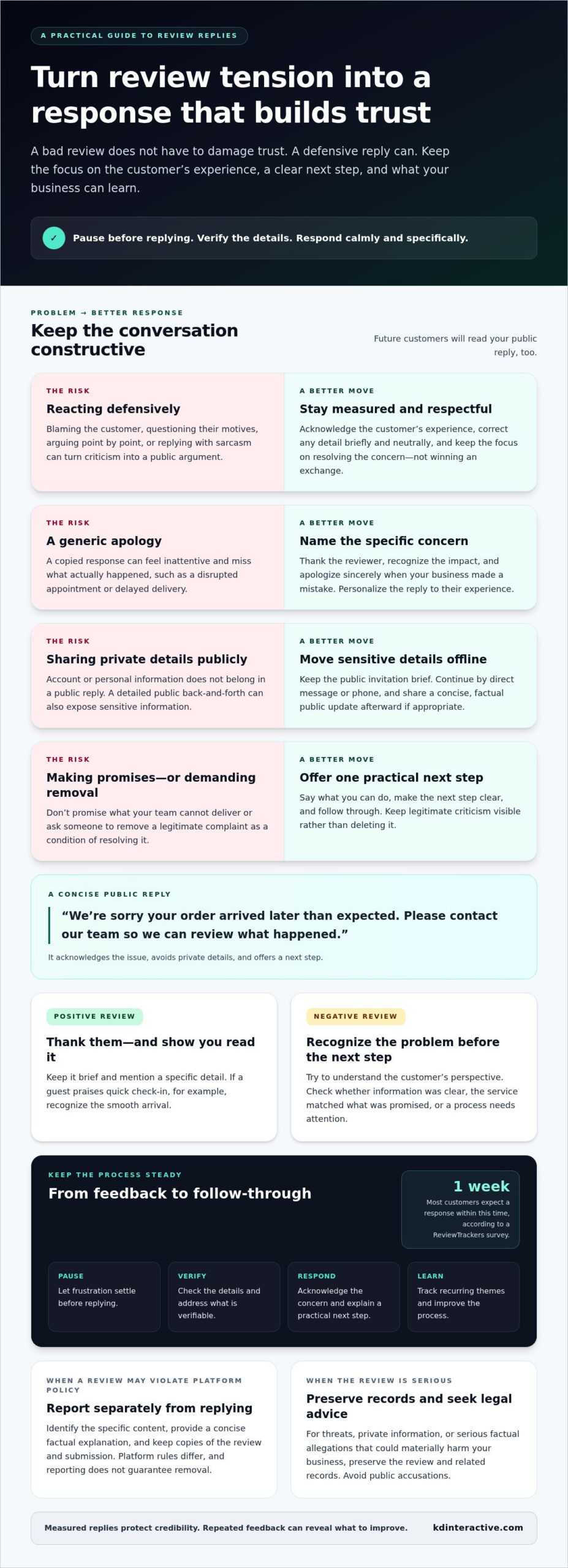
Avoid blaming the customer, questioning their motives, or arguing point by point in public. Don’t use sarcastic lines such as “You should have read the policy” or make promises your team can’t keep. If you need to correct a detail, do so briefly and neutrally, then offer a private conversation. For example: “We’re sorry your order arrived later than expected. Please contact our team so we can review what happened.”
For a review that seems fake, abusive, or unfair, stay measured and address only verifiable details. A trusted spouse, close friend, or colleague can read the review and draft before you reply, helping filter out anger without dismissing useful feedback. Ask them to flag defensive wording and check whether your response answers the customer’s actual concern.
If a review appears to violate a platform’s policies, use that platform’s reporting or dispute process. Identify the specific content at issue and provide a concise, factual explanation. Keep a copy of the review and your submission for your records. Reporting a review is separate from replying publicly, and it does not mean the review will be removed.
Google, Yelp, and other platforms provide spaces for business responses and processes for disputing reviews. Their rules and procedures differ, so read the relevant platform guidance before submitting a report. Keep any public reply respectful and focused on the customer’s experience, since future readers can see it too.
Seek legal advice if a review includes threats, private information, or serious factual allegations that could materially harm your business. Preserve the review and related records, and avoid making public accusations about the reviewer. A lawyer can assess the specific circumstances and advise you on an appropriate response.
2. Negative reviews and the credibility of positive reviews
A page filled only with glowing feedback can seem less balanced to cautious customers. A mix of positive and negative reviews may make praise feel more credible because readers see a range of experiences. Keep legitimate criticism public rather than deleting it. Removing fair feedback can make the original concern harder to address and deepen distrust.
Respond promptly, but don’t let speed turn into a rushed argument. A ReviewTrackers survey found that most customers expect a business to respond within one week. A practical routine is to acknowledge the concern, check the details, and post a calm reply. For example, if a customer reports a confusing appointment process, recognize their frustration and explain what you’re improving.
Taking a negative review conversation offline means inviting the customer to continue through a private channel, such as a direct message or phone call. Keep the public invitation brief. Once the issue is addressed, return to the review with a concise, factual update if appropriate.
Don’t ask the reviewer to remove a legitimate complaint as a condition of resolving it. Instead, make the next step clear and follow through. If the business is reviewing a billing error, for instance, say so privately without publishing account details. This shows future readers that you follow up responsibly while protecting the customer’s privacy.
Track repeated themes alongside positive comments. If several reviews praise friendly staff but mention unclear booking instructions, preserve both signals and improve the instructions. A consistent voice across review replies and other customer messaging helps readers understand what to expect. Businesses refining that messaging can use customer-focused content creation to keep explanations clear and consistent.
A prompt public response gives your business a chance to acknowledge a negative review where other readers can see it. Keep your reply measured: don’t be defensive or argue with the reviewer. The aim is to address the issue, not win an exchange. Don’t delete a legitimate negative review, as doing so may make the problem worse. A calm response and willingness to address criticism keep the conversation focused on resolving the concern.
3. Responding to positive and negative customer reviews
Reply to positive reviews with a brief thank-you and a detail that shows you read them. If a guest praises a quick check-in, mention the smooth arrival. For a negative review, recognize the specific problem before describing a next step. “We understand the wait disrupted your appointment” feels more attentive than a generic apology. Tailor each reply to the reviewer’s experience rather than relying on a copied script.
Try to understand what happened from the customer’s perspective. A negative review may reflect unmet expectations, such as unclear booking instructions or a delayed delivery, rather than hostility. Acknowledge the impact, then examine the customer journey: Was the information easy to find? Did the service match what was promised? These questions help distinguish a one-time issue from a process that needs attention.
Invite satisfied customers to share honest feedback through appropriate touchpoints, such as a follow-up conversation or community update. Make the request neutral, and don’t offer rewards in exchange for reviews. That keeps feedback authentic and avoids making praise feel purchased. Thank customers who choose to respond, regardless of their rating. With permission, you can also share genuine customer stories through social channels to show experiences beyond star ratings.
Look for repeated concerns across reviews instead of treating every complaint as isolated. If several customers mention confusing pickup instructions, review the signage, confirmation messages, and staff guidance. Record the pattern, identify where the process breaks down, and assign a practical improvement. Then monitor later feedback to see whether the issue continues. Positive comments matter too: repeated praise for helpful staff can show which practices to maintain. Consistent responses turn individual reviews into useful signals for improving the customer experience.
For a complaint, stay calm, acknowledge the customer’s experience, empathize, take responsibility, and apologize. Offer a solution and invite the customer to continue the discussion offline. Treat recurring negative feedback as a signal for process improvement; loyal customers may also be encouraged to share positive experiences through community programs, newsletters, or social channels.
4. Creating a review-management plan
A written plan makes review handling a repeatable process rather than an occasional task. Assign someone to monitor platforms, a backup to cover absences, and a manager to handle sensitive complaints. Record the review date, platform, main concern, reply status, and follow-up action. For example, a shared tracker can show whether a complaint about unclear service hours has been addressed.
Set a checking schedule that matches your review volume. Businesses receiving few reviews can check platforms weekly. Those receiving multiple reviews daily may need to check more often. Include every relevant site, such as Google, Facebook, Yelp, and Tripadvisor. A recurring calendar reminder helps prevent a busy week from leaving customer feedback unattended.
Use a simple workflow for each new review:
- Log the review and identify its main issue.
- Check relevant records with the staff involved.
- Draft a factual, respectful reply and assign an owner.
- Track private follow-up and note whether the issue was resolved.
- Review recurring themes and assign process improvements.
Set escalation guidelines, too. A routine comment about wait times can go to the service manager, while a complaint involving private information needs restricted handling. Use response templates for structure, not as copy-and-paste replies. Each final response should reflect the customer’s actual concern. Review the tracker regularly to spot repeated issues, such as unclear booking steps, and assign someone to address them.
Make the plan useful by reviewing both response consistency and operational changes. If the same concern continues after a process update, investigate whether the change reached customers and staff. A practical system supports thoughtful replies and helps teams act on feedback. If you’re ready to strengthen your local visibility alongside a consistent customer communication plan, build a stronger local presence.
KD Interactive: Local SEO Services
KD Interactive helps small businesses strengthen their local search visibility with Local SEO Services. If your review process is in place but customers still struggle to find accurate business information online, local SEO can help make that information easier to find. Content Creation can also support clear, consistent messaging across the pages customers use to learn about your business.
Review management and search visibility work together: professional replies show how you handle feedback, while useful local content helps people understand what you offer. KD Interactive can tailor an approach to your business goals with Local SEO Services, Content Creation, Press Release Distribution, or SEO Keyword Analysis.
Contact KD Interactive to discuss your local visibility goals and next steps.
Turn customer feedback into a stronger next step
Reviews can inform more than individual replies. They can reveal where customers need clearer information before choosing your business. Use those insights to shape useful website content and strengthen your business’s appearance in local search. Knowing how to handle bad reviews gracefully helps build a credible presence, but your public messaging should also reflect what customers value and what your business does well.
KD Interactive offers Local SEO Services, Content Creation, and Press Release Distribution to support businesses working on local visibility and customer-facing communication. If you’re ready to connect your review insights with a practical digital marketing approach, contact KD Interactive to discuss your reviews. Take the next step with a clearer view of how your online presence can support your business.
Frequently Asked Questions
What is the best response time for replying to negative reviews?
Reply as promptly as you can while allowing time to verify the facts. According to ReviewTrackers, most customers expect businesses to respond within one week. If you need more time to investigate, post a brief acknowledgment first, then follow up with a considered response. For example, tell the customer you’re reviewing a delivery issue and will share an update through a private channel.
Should you offer a refund or compensation in response to a bad review?
Offer a remedy when it fits the facts and your business policies, not simply to influence a review. A refund, replacement, or another service opportunity may be appropriate for a verified service failure. Explain the option privately and apply it consistently to comparable cases. Don’t make compensation conditional on changing or removing a review. The goal is to address the customer’s problem fairly.
How can businesses learn from negative reviews and prevent repeat complaints?
Turn each complaint into a trackable improvement task. Record the issue, where it occurred, and the team responsible, then compare similar cases to find a shared cause. If customers report unclear pickup instructions, revise them and ensure staff use the same wording. Later, review new feedback and customer conversations to see whether confusion persists. This connects customer comments to specific operational changes.