
Why are your neighbors searching for products you have on your shelves right now, yet they end up driving to a big-box competitor instead? It’s often because your digital storefront doesn’t reflect your physical reality. Mastering local seo for retail stores in 2026 requires more than just a basic map listing. It demands real-time visibility through Local Inventory Ads. You’ve likely felt the sting of high bounce rates on your e-commerce pages or the headache of inventory sync issues that leave customers frustrated. It’s a common struggle for Wisconsin retailers trying to keep pace with rising customer acquisition costs.
We know that managing complex data feeds while running a physical shop is a massive undertaking. This guide shows you how to drive massive foot traffic by mastering the strategy and tools behind Local Inventory Ads. You’ll learn how to create a seamless sync between your shelf stock and Google search results to ensure a higher ROI on your local spend. We’ll preview the latest Google Merchant Center requirements and show you how tools like the Google Map Pack with AI Assistant can turn “near me” intent into immediate in-store revenue.
Key Takeaways
- Discover why “In Stock Near Me” searches are the new standard for driving immediate foot traffic to your local shop in 2026.
- Learn the step-by-step process for linking your Google Merchant Center to your physical store to ensure your digital window reflects your actual shelf stock.
- Understand how local seo for retail stores shifts from national shipping targets to local store visits by comparing Local Inventory Ads with standard Google Shopping Ads.
- Identify the critical features needed in an LIA management partner, including real-time inventory syncing and advanced Google Business Page optimization.
- Explore how tools like the Google Map Pack with AI Assistant can automate customer engagement and capture local intent at the moment of search.
Bridging the Online-to-Offline Gap for Local Retailers
Local Inventory Ads (LIAs) serve as your digital window. They show potential customers exactly what’s on your shelves before they ever leave their house. In years past, a simple map listing was enough to get people through the door. Today, effective local seo for retail stores requires a more transparent approach. If a shopper sees your ad but arrives to find an empty shelf, you’ve lost more than a sale; you’ve lost their trust. LIAs solve this by syncing your physical inventory with Google Search results in real time. This ensures that every click has the potential to become a physical walk-in.
Consumer expectations have changed. While two-day shipping once felt like the peak of convenience, the demand for immediate gratification has brought shoppers back to local storefronts. They want to touch, try, and take home their purchases today without the wait. By displaying live stock levels, you eliminate the “out of stock” gamble that often drives customers toward national e-commerce giants. It’s about providing certainty. Modern local seo for retail stores must bridge the gap between digital browsing and physical buying by proving that your shop has the solution right now.
The Evolution of Local Search in 2026
Hyper-local local search behavior has matured. In 2026, the standard “near me” query has been replaced by “in stock near me.” Customers use mobile devices to filter for businesses that can fulfill their needs immediately. Standard SEO strategies that focus solely on keywords and backlinks often fail retail stores because they don’t address this specific intent. You need a system that communicates your current stock levels directly to mobile-first users. They aren’t just looking for information; they’re looking for a destination where they can complete a transaction within the hour.
The ROI of Showing Real-Time Inventory
The financial benefits of LIAs are clear. These ads often generate higher click-through rates because they answer the shopper’s most pressing question: “Can I get this right now?” By targeting high-intent local shoppers, you effectively lower your cost-per-acquisition. You aren’t wasting budget on clicks from users who won’t make the trip. Instead, you’re investing in neighbors who are already in their cars. A single successful in-store visit often converts a stranger into a repeat customer. For a Wisconsin retailer, this local loyalty is the foundation of long-term growth. It’s about turning a search result into a lasting relationship.
The Mechanics of Local Inventory Ads (LIA) Management
Success with LIAs requires a methodical approach to technical setup. It’s about precision. First, you must link your Google Merchant Center to your Google Business Profile. This connection allows Google to associate your digital product data with a specific physical location. Once linked, you create a Local Products Feed. Unlike a standard shopping feed, this one must update daily to reflect what’s actually on your shelves. This ensures your local seo for retail stores remains competitive. Google then initiates a verification process to ensure your “in-stock” claims are accurate. This might involve a physical store check where a representative confirms your shelf stock or a digital audit of your data. Finally, you design the Local Storefront, which is the landing page shoppers see. It must provide clear details like store hours, distance from the user, and current pricing to convert that digital interest into a visit.
Mastering the Local Products Feed
Your product feed is the heart of your local seo for retail stores strategy. Key attributes like GTINs, availability, and local pricing are non-negotiable for success. Common errors, such as mismatched prices between your feed and your shelf tags, can lead to immediate ad suspension. Missing shipping weights or incorrect tax settings are other frequent culprits that can stall your campaign before it even starts. To avoid these headaches, many Wisconsin retailers choose to automate the sync between their Point of Sale (POS) system and Google. This automation reduces manual labor and ensures your data remains fresh. If you’re feeling overwhelmed by the technical hurdles, our team provides comprehensive local SEO services to manage these feeds for you.
Optimizing for Store Pickup and Curbside
The “Pick Up Today” badge is a massive conversion driver. It signals to the customer that their wait time is zero. Configuring curbside pickup options within your ad settings is equally vital for meeting modern expectations. According to U.S. retail trade statistics, the landscape of how people buy is shifting toward these hybrid models. Providing clear instructions on where to park or which entrance to use for curbside pickup can significantly improve the customer experience. Managing the inventory lag is the final piece of the puzzle. You must ensure your system accounts for the time between a customer’s click and their arrival. Using tools like the Google Map Pack with AI Assistant helps bridge this gap by capturing intent and providing immediate answers to local shoppers.
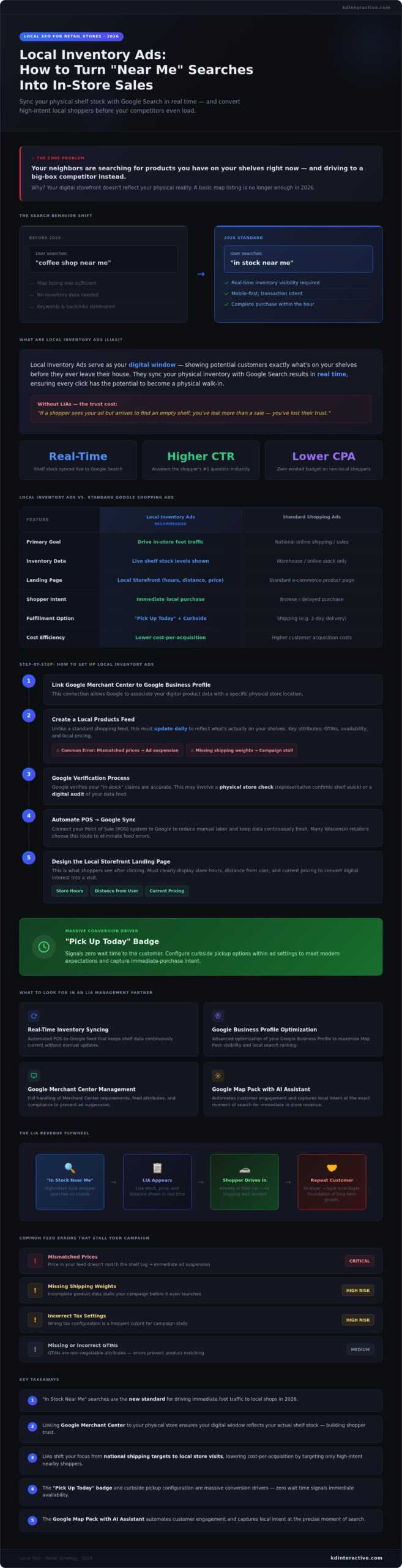
Comparing Local Inventory Ads vs. Standard Google Shopping Ads
Standard Shopping Ads prioritize the online transaction. They assume the customer wants a box on their porch in two days. Local Inventory Ads (LIAs) operate on a different premise; they prioritize the physical handshake. For a retailer, this distinction is vital for a healthy bottom line. When you’re managing local seo for retail stores, you have to decide where your advertising dollars work hardest. Standard ads often pit you against national giants with massive shipping discounts. LIAs allow you to win the battle for the local neighborhood by highlighting immediate availability and local convenience.
Cost-per-click (CPC) often varies significantly between these two formats. National targeting in standard Shopping Ads can be expensive due to high competition across the entire country. Localized targeting through LIAs often results in a more efficient spend because you’re only bidding on users within a specific radius of your storefront. This is particularly beneficial for low-margin items. If shipping costs eat up your entire profit on a product, driving a customer to your store is the only way to make the sale viable. It turns a potential logistics loss into a profitable local transaction.
Which Ad Type Wins the Budget Battle?
Local intent typically carries a higher conversion rate. A shopper searching for a specific product “near me” is often ready to buy within the hour. LIAs protect your margins by eliminating the logistics and packaging costs associated with e-commerce. When planning for seasonal peaks, such as the holiday rush or back-to-school shopping, allocating more budget to LIAs ensures you capture the last-minute shoppers who don’t have time to wait for a delivery truck. It’s a pragmatic way to ensure your inventory moves when demand is highest.
The Hybrid Approach for Maximum Visibility
The most successful Wisconsin retailers don’t choose one over the other. They use a hybrid strategy to cover all bases. You might use LIAs for your top-sellers and heavy items that are costly to ship, while using standard Shopping Ads for niche products with a wider geographic appeal. By tracking “Store Visit Conversions” in your dashboard, you can see exactly how many digital clicks led to actual foot traffic. Integrating your local SEO services with these paid efforts creates a comprehensive digital presence. This dual approach ensures your store remains visible to every type of shopper, whether they’re sitting on their couch or driving down your street.
Key Features to Look for in an LIA Management Partner
Choosing the right partner to manage your Local Inventory Ads is a critical business decision for any storefront owner. You need more than just a basic software subscription; you need a team that understands the deep technical nuances of local seo for retail stores. A true partner ensures that your digital inventory matches your physical reality every minute of the day. Real-time syncing is the only way to prevent the customer disappointment that occurs when a “buy” click leads to an empty shelf. Proactive feed management is equally vital. Google Merchant Center updates its requirements frequently, and you need a specialist who anticipates these shifts before they ever impact your visibility or cause ad suspensions.
Your partner must also demonstrate deep expertise in Google Business Page setup and ongoing optimization. This profile is the anchor for your local ads. If the data there is inconsistent or outdated, your ad performance will suffer. We focus on building a foundation that supports long-term growth rather than just temporary traffic spikes.
Data-Driven Reporting vs. Vanity Metrics
In 2026, you should ignore vanity metrics like total impressions or generic reach. These numbers look good on a slide deck but they don’t pay the bills. Instead, your reporting must focus exclusively on store visits and revenue-tied outcomes. A transparent report shows you exactly how many people clicked an ad and then physically entered your store. This level of detail allows you to find genuine growth opportunities and understand the true impact of local seo for retail stores on your bottom line. You want to see the direct line between your ad spend and your register receipts. If your current reports don’t show store visit conversions, you’re flying blind.
The Value of Regional Expertise
There is a distinct advantage to working with a Wisconsin SEO company rather than a distant national firm. A local partner understands the specific neighborhoods, landmarks, and seasonal shifts that matter to your customers. They can weave hyper-local references into your ad copy that resonate deeply with your community. This regional knowledge turns a generic ad into a compelling invitation to visit your specific shop. Plus, you get the benefit of direct, personal communication. You deserve a partner who picks up the phone and understands the local retail climate in your specific town.
If you’re ready to dominate your local market and ensure every digital search leads to a physical sale, it’s time to invest in local SEO services that prioritize your store’s unique needs.
Driving Retail Revenue with KD Interactive’s Local SEO Expertise
We don’t just set up your ads and walk away. At KD Interactive, we view Local Inventory Ads as a single, powerful component of a comprehensive local digital marketing strategy. Our goal is to ensure your storefront is the obvious choice for every local searcher through effective local seo for retail stores. We achieve this by combining LIA management with our specialized Google Map Pack with AI Assistant. This tool acts as a 24/7 digital concierge, capturing “near me” intent and providing immediate answers to potential buyers. When you combine real-time inventory visibility with automated engagement, your physical store becomes a magnet for high-intent traffic.
Building a dominant presence requires more than just data feeds. We provide tailored content creation that highlights your specific product categories and local expertise. This is supported by our proven reputation management services. We help you gather and manage the reviews that build trust and close the sale. In a competitive market, having the product in stock is only half the battle; you also need the social proof to convince the shopper that your store is the best place to buy it.
The KD Interactive Difference for Retailers
Our approach is pragmatic and strictly focused on your results. We understand that as an entrepreneur, your time is best spent on the sales floor, not wrestling with data spreadsheets. We handle the technical heavy lifting of feed management and Merchant Center compliance. Unlike national SaaS platforms that offer standardized software, we provide a bespoke service rooted in regional specialized knowledge. As a Wisconsin-based team, we align our success with yours and share your commitment to the local community. We build trust through transparency; you’ll always know exactly how your budget is being used and how it translates into store visits.
Getting Started: Your Retail Growth Map
The first 30 days of your campaign focus on foundation and integration. We start by auditing your current digital footprint and identifying the gaps in your local seo for retail stores. To begin, we need a secure export or API connection from your Point of Sale (POS) system. This allows us to build your initial Local Products Feed. Within the first month, you’ll see your “In Stock” badges appear in local search results, signaling to your neighbors that you have exactly what they need. Ready to turn digital searches into physical sales? Contact KD Interactive for a professional assessment and start your growth map today.
Securing Your Store’s Future in the Local Market
Success in 2026 depends on your ability to meet customers where they are: on their phones, looking for immediate solutions. Local Inventory Ads bridge the gap between a digital search and a physical sale by proving your product is ready for pickup right now. By mastering local seo for retail stores, you reclaim your neighborhood from national e-commerce giants and stop losing sales to inventory sync errors. You’ve worked hard to stock your shelves; don’t let a lack of digital visibility keep your doors quiet.
We specialize in Wisconsin small business growth by handling the technical complexities of expert local feed management. Our team ensures your storefront stays visible through tools like the Google Map Pack with AI Assistant. You focus on running your shop while we manage the data that drives revenue. Ready to see the difference a tailored strategy makes? Get Your Free Retail SEO Assessment from KD Interactive. Your neighbors are searching for you. It’s time to make sure they find you.
Frequently Asked Questions
What are Google Local Inventory Ads?
Google Local Inventory Ads are a specialized ad format that showcases your products and store information to shoppers searching nearby. They display a “pick up today” badge and provide essential details like store hours and distance. This tool is a cornerstone of local seo for retail stores. It captures high-intent customers who want to purchase items immediately at a physical location. They don’t want to wait for a delivery.
How much does local inventory ads management cost?
The cost of managing these ads typically includes your direct ad spend paid to Google and a professional management fee. Your ad spend is flexible. It’s based on a cost-per-click model that fits your budget. Management fees vary depending on the complexity of your product feed and your total locations. Investing in professional oversight ensures your budget isn’t wasted on mismatched inventory. This leads to a much higher return on your local investment.
Do I need an e-commerce website to use Local Inventory Ads?
You don’t need a full e-commerce website to benefit from these ads. Google provides a “Google-hosted local storefront” option. This acts as a dedicated landing page for your products where customers can view your inventory, store hours, and directions. It’s an ideal solution for traditional Wisconsin retailers who want to drive foot traffic without the overhead of managing a complex online shopping cart or national shipping logistics.
How does Google verify my in-store inventory?
Google uses several methods to ensure your “in-stock” claims are accurate. The primary method is your daily Local Products Feed update. Google also performs random inventory checks. This might involve a representative visiting your Watertown or Milwaukee shop to verify shelf stock. They also use digital audits to compare your feed data with your store’s recent sales patterns. Maintaining an accurate feed is essential to avoid ad suspension and maintain customer trust.
Can I target specific neighborhoods in Milwaukee or Madison?
You can absolutely target specific neighborhoods in Milwaukee, Madison, or any other Wisconsin city. Google Ads allows for precise radius targeting around your physical address. You can set your ads to appear only to people within five or ten miles of your storefront. This hyper-local approach is a key part of local seo for retail stores. It ensures your budget is spent on neighbors who are actually close enough to make the drive.
What is the difference between LIA and standard Shopping Ads?
The main difference lies in the customer’s intent and the fulfillment method. Standard Shopping Ads focus on e-commerce sales and national shipping. Local Inventory Ads focus on driving physical foot traffic to a specific brick-and-mortar location. While standard ads show a product price and shipping time, LIAs highlight “in-store today” availability. This makes LIAs much more effective for local retailers selling items that customers need immediately or want to inspect in person.
How do I track if someone visited my store after seeing an ad?
You track store visits through Google’s Store Visit Conversions. This metric uses anonymized data from users who have Location History turned on. It identifies when a shopper clicks your ad and subsequently enters your physical store. At KD Interactive, we also use our Google Map Pack with AI Assistant to capture intent. This provides a more granular look at how digital interactions turn into real-world conversations and sales at your register.
Is my POS system compatible with Google Merchant Center?
Most modern POS systems are compatible with Google Merchant Center. Systems like Shopify, Square, and Clover offer direct integrations or easy export tools to sync your stock levels. If your system is older, you can still participate by using a supplemental feed or a manual spreadsheet upload. We help manage the technical heavy lifting of these connections to ensure your shelf stock and digital ads stay perfectly aligned without constant manual data entry.